
More Than Just a Vessel: The Story Behind the Hand-Painted Tea Cup and the Art of Slowing Down
The rain was drumming a steady, rhythmic beat against the windowpane of my study, a stark contrast to the chaotic noise of the city streets below. It was one of those Tuesdays that felt like it had lasted a week—emails piling up, deadlines looming, and that persistent, low-level hum of anxiety that seems to define modern life. I needed a break. Not the kind where you scroll through social media for twenty minutes and end up feeling more drained, but a real break. A moment of stillness.
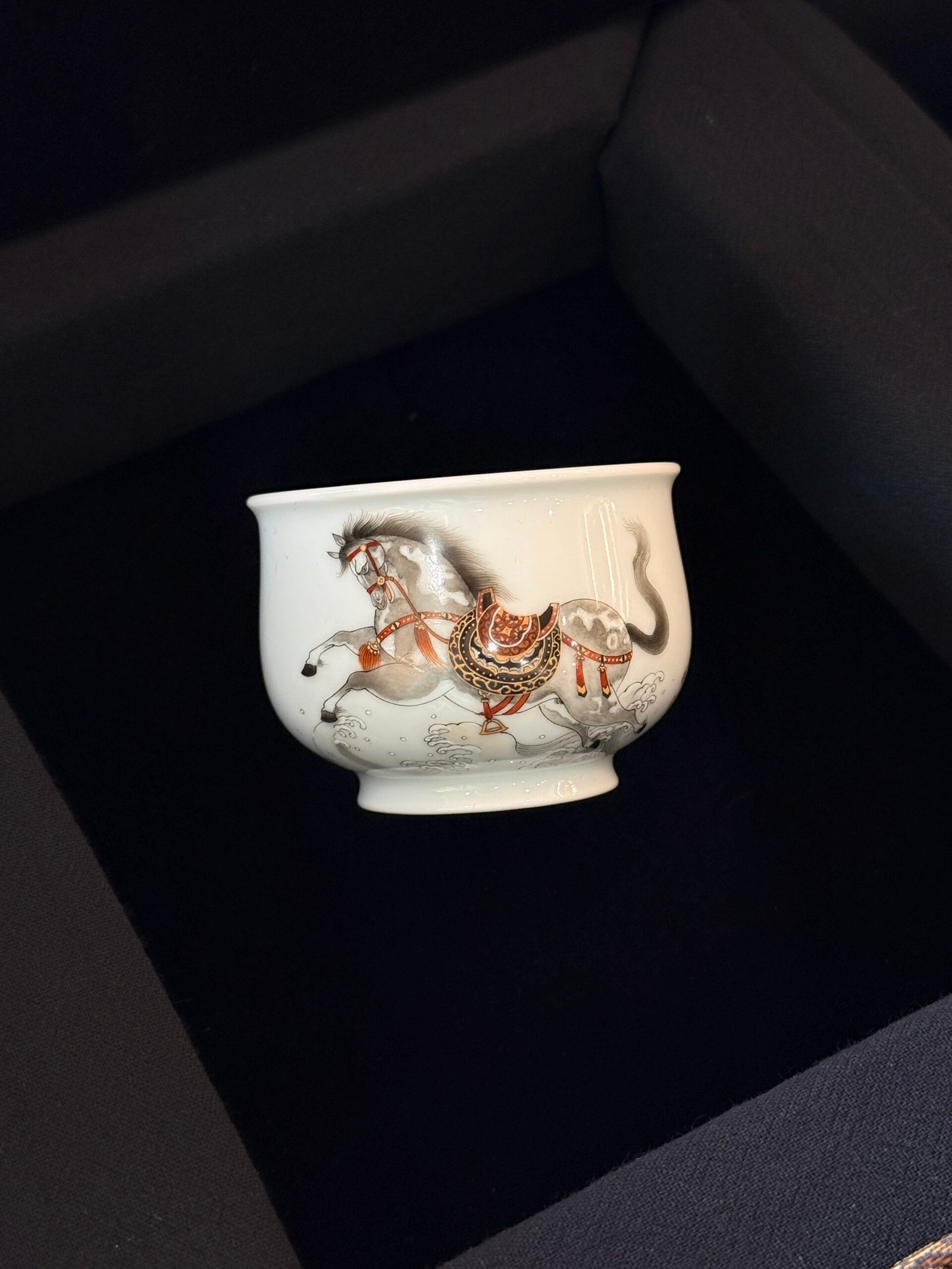
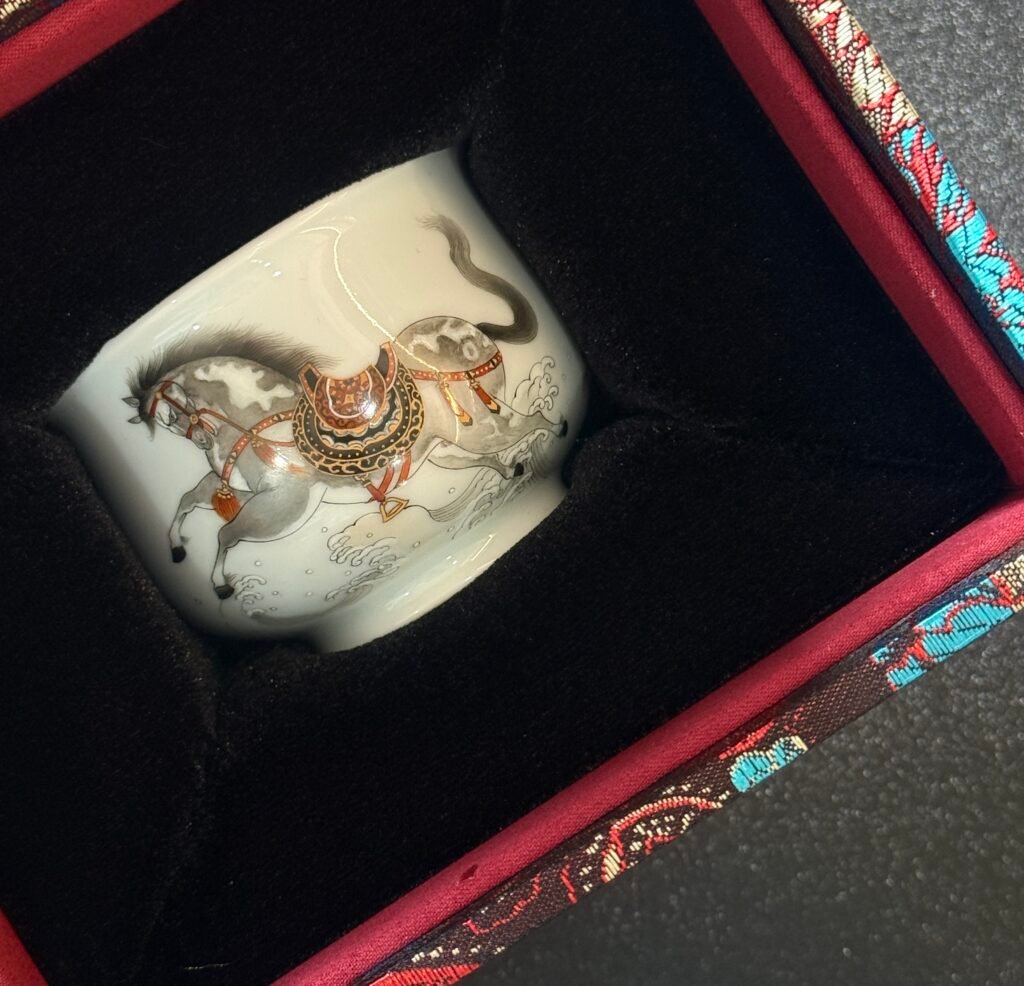
I walked over to my tea shelf, a modest collection of ceramics I’ve gathered over the years. My hand bypassed the plain white mugs and the utilitarian glass tumblers, reaching instead for a small, velvet-lined box tucked away in the corner. Inside rested a piece that always seemed to catch the light differently: a hand-painted tea cup, adorned with the striking image of a spirited horse.
Holding it in my palm, I felt the familiar, comforting weight of the ceramic. It wasn’t just a vessel for hot water; it was a tangible connection to a slower, more deliberate way of living. As I poured the steaming amber liquid of a roasted Oolong into the cup, watching the steam rise around the painted mane, I found myself thinking about the journey this object represents—not just the journey of the tea from leaf to cup, but the journey of craftsmanship and the symbolism that makes such an object a centerpiece of a home.
The Ritual of the “Master Cup”
In the world of tea culture, specifically within the Gongfu Cha tradition, there is a concept known as the “Master Cup” or Zhuren Bei. Unlike the tiny tasting cups shared among guests, the Master Cup is personal. It is the vessel chosen by the host or the solitary drinker for their own enjoyment. It is an extension of one’s personality.
Why choose a cup with a horse? Why not a simple flower or a geometric pattern?
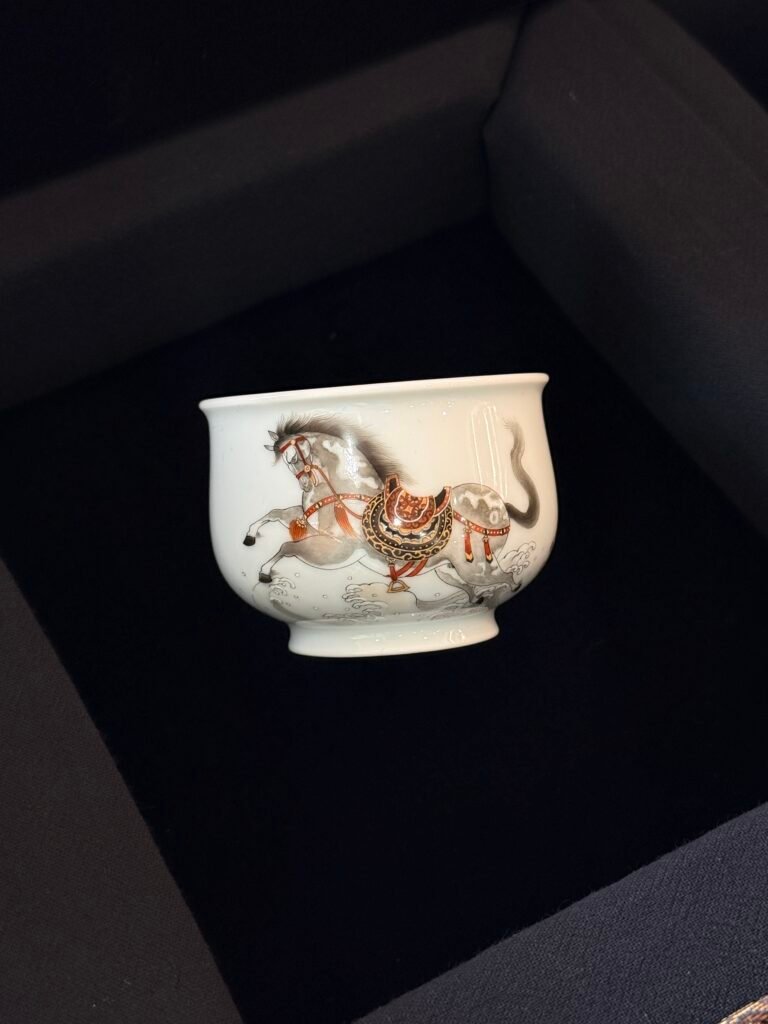
For me, it comes down to energy. When you are sitting alone, negotiating with your own thoughts, or perhaps hosting a close friend to discuss big ideas, you want an atmosphere of momentum. The image on this specific hand-painted tea cup—a powerful, grey dapple horse galloping through stylized waves—is not accidental. In Eastern art history, the horse is a profound symbol. It represents stamina, loyalty, and speed. But more importantly, in the context of business and life aspirations, it carries the idiom Ma Dao Cheng Gong—”Instant Success” or “Success upon the arrival of the horse.”
Looking at the cup, I don’t just see an animal; I see a reminder to keep moving forward, to tackle the obstacles (represented by the crashing waves beneath the hooves) with grace and power. It transforms the act of drinking tea from a mundane hydration habit into a micro-meditation on ambition and resilience.
The Art of the Brush: Why Hand-Painted Matters
In an era of mass production, where thousands of identical items roll off conveyor belts every hour, the term “hand-painted” carries a heavy significance. When you look closely at this porcelain cup, you can see the evidence of the human hand.
The shading on the galloping horse’s muscles isn’t a perfect, digital gradient. It has the slight variation of a brush loaded with pigment, dragged across the curved surface of the bisque ware. The artist had to account for the curvature of the cup, distorting the image slightly in their mind so that it would look correct to the eye of the drinker. This is a skill that takes years to master.
The technique used here appears to be a blend of traditional Famille Rose (Fencai) influences and modern “New Color” styles. The grey tones of the horse are rendered with a wash technique, creating a sense of volume and fur texture that flat printing simply cannot achieve. Then, there are the details—the saddle and the bridle. These are painted with precise, confident strokes, often highlighted with gold or deep red enamels.
When you run your thumb over the surface of a high-quality porcelain cup, it should feel like jade—smooth, cool, and substantial. The glaze protects the painting, sealing the art under a glass-like layer that ensures the colors won’t fade with use. But knowing that a real person sat at a wheel, mixed these specific pigments, and breathed life into this horse creates a connection between the maker and the user. You aren’t just buying a cup; you are acquiring a piece of someone’s time and talent.
Symbolism in Design: The Horse and the Waves
Let’s delve deeper into the imagery, because in Feng Shui and cultural symbolism, every detail counts.
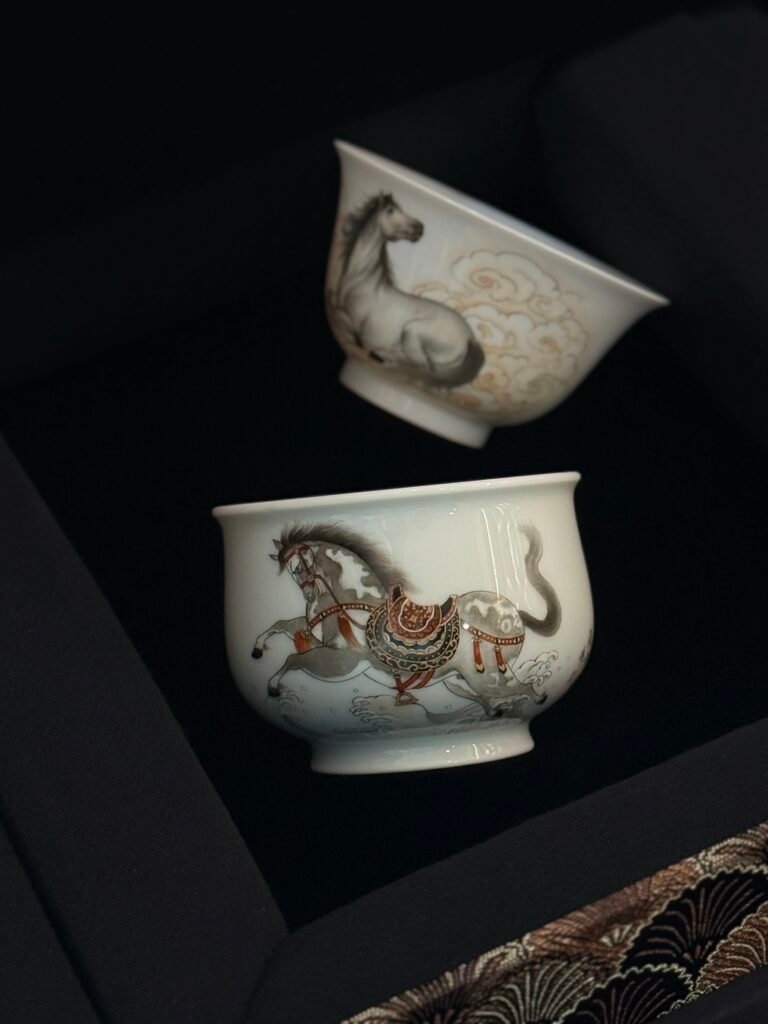
The horse depicted is not a wild mustang running untamed; it is saddled and bridled. This suggests control and utility. It is a partner to humanity, ready to be ridden toward a goal. The saddle itself is ornate, decorated with intricate patterns that suggest value and nobility. In ancient times, only the wealthy or the military elite possessed such finely caparisoned horses. Thus, the cup subtly invokes a sense of nobility and high status.
Beneath the horse, we see the waves. In Chinese art, water often represents wealth and fortune (as water flows, so does money). However, rough water can also represent challenges. By depicting the horse galloping over or through the waves, the imagery conveys a powerful message: the ability to navigate through turbulent times and emerge victorious. It is a visual affirmation that no matter how choppy the waters of your career or personal life become, you have the strength to cross them.
This is why such a cup makes a profound gift. Giving this to a colleague who is starting a new business, or a friend who is studying for difficult exams, is a non-verbal way of saying, “I believe in your success. I believe you will conquer the waves.”
Selecting the Right Porcelain for Your Tea
Beyond the art, let’s talk about the practical side of using a cup like this for your daily brew. Not all ceramics are created equal.
The porcelain used in high-end tea cups is typically fired at very high temperatures (often above 1300°C). This vitrification process makes the clay non-porous. Why does this matter? Because tea is sensitive. If you use a porous clay (like some unglazed earthenware) for a fragrant Green Tea or a delicate White Tea, the cup might absorb the flavors and odors, muting the experience.
High-fired porcelain is neutral. It acts as a perfect stage for the tea, reflecting the true color of the liquor—be it the pale yellow of Silver Needle or the deep orange of a aged Pu-erh. The shape of the cup shown in our collection—slightly tapered at the bottom with a wider mouth—is designed to allow the aroma to gather while the tea cools slightly faster than in a tall mug, making it ready to sip sooner.
Furthermore, the thinness of the rim is crucial. A thick, clumsy rim distracts from the texture of the tea. A fine, rolled rim allows the liquid to flow smoothly onto the tongue, enhancing the mouthfeel. When you lift this horse-adorned cup to your lips, the tactile experience is part of the flavor profile.
A Gift That Tells a Story
We live in a digital world. We send e-cards, text messages, and digital gift cards. While convenient, they lack permanence. They are deleted and forgotten.
Physical objects anchor memories. Imagine presenting this hand-painted tea cup to someone. You aren’t just handing them a box; you are handing them a story. You open the silk-lined brocade box—a packaging style reserved for treasures—and reveal the gleaming white porcelain inside.
You explain the meaning: “This is for your new venture. May you have the speed of the horse and the ability to ride out any storm.”
Years later, long after the card has been thrown away, that person will still be using this cup. Every morning, as they pour their coffee or their tea, they will see the horse. They will be reminded of your kindness and your belief in them. That is the power of a thoughtful, culturally rich gift. It transcends the object itself and becomes a token of relationship.
Integrating Art into Daily Life
Some people reserve their nice things for “special occasions.” They keep the hand-painted cups in the cabinet, afraid to chip them, waiting for a day that feels “fancy enough.”
I urge you to reject that mindset.
Life is too short to drink bad tea from ugly mugs. The “special occasion” is the fact that you are alive, that you have a moment of quiet in a busy day, that you have a warm beverage to comfort you.
Using this horse cup on a random Tuesday afternoon doesn’t diminish its value; it enhances your life. It elevates the mundane. It turns a caffeine fix into a cultural experience. It reminds you that beauty and utility can coexist.
When I finished my Oolong that rainy Tuesday, the cup was warm in my hand. The horse seemed to be moving faster now, energized by the heat of the tea. I set it down gently on the wooden coaster. The anxiety of the emails hadn’t disappeared, but my perspective had shifted. I felt grounded. I felt ready to tackle the waves.
Conclusion: The Journey Continues
Whether you are a seasoned collector of Jingdezhen ceramics, a lover of traditional symbolism, or simply someone looking to add a touch of elegance and meaning to your morning routine, the hand-painted tea cup offers something unique.
It is a fusion of earth (the clay), fire (the kiln), water (the tea), and spirit (the art). It is a functional tool that feeds the soul.
As you browse our collection, look beyond the price tag. Look at the brushstrokes. Look at the expression of the horse. Imagine it in your hand, filled with your favorite brew. Imagine the conversations it will witness and the quiet moments of peace it will provide.
This isn’t just pottery. It’s a companion for your journey. And like the horse painted on its side, may it bring you speed, stability, and instant success in all your endeavors.
Add comment