
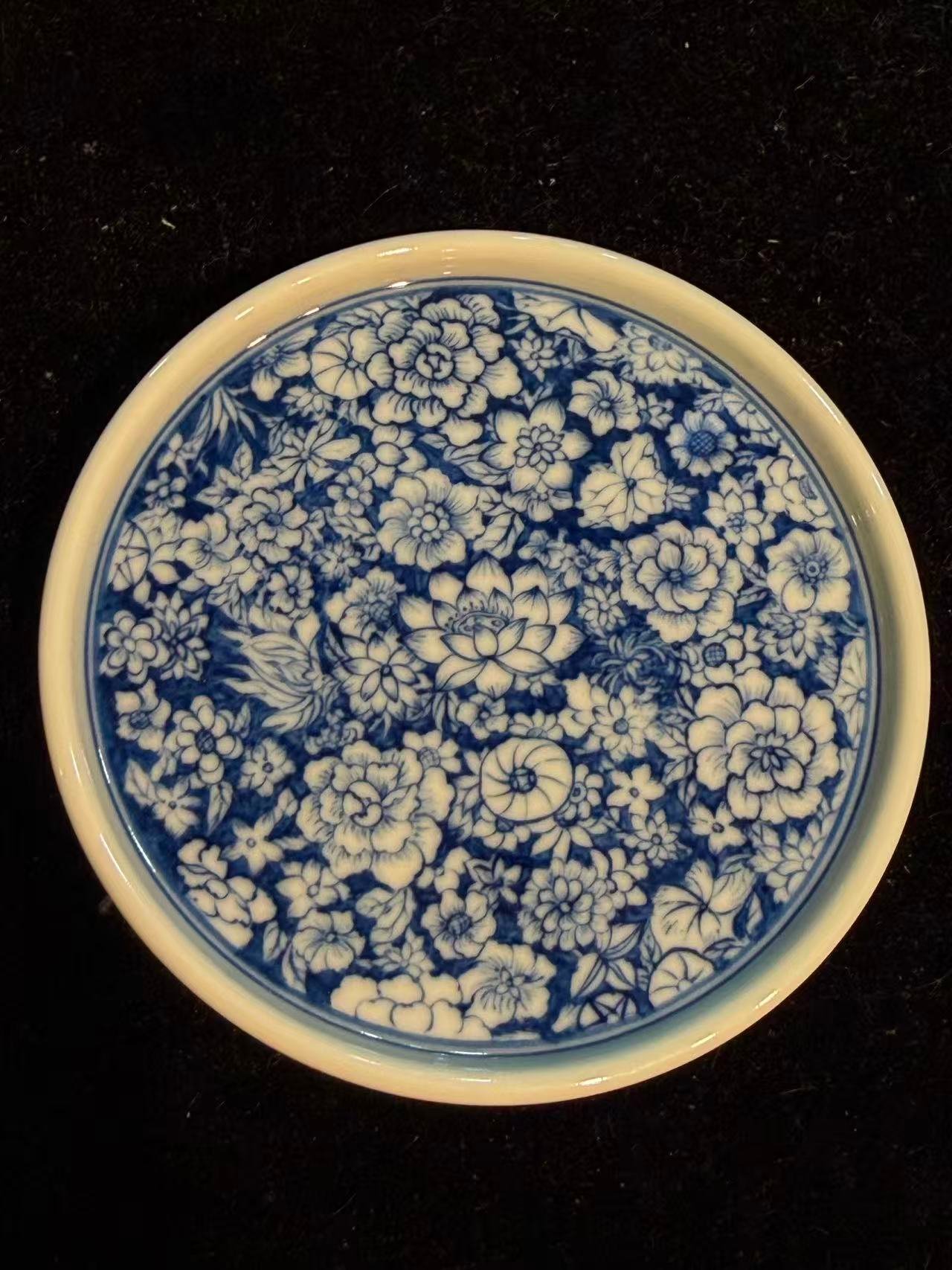
Blue and White Porcelain Lid Rest: 7 Best Beautiful Tips
LID REST !
1. The Day I Met the Last Brush-Strokes of Jingdezhen
Three years ago, I found myself walking through a narrow alleyway in Jingdezhen, a city where the air itself seems to carry the scent of kaolin clay and historical whispers. I was looking for something small—a unique piece of tea ware. Many would wonder why someone would travel thousands of miles for a tiny ceramic cylinder meant only to hold a teapot lid. But for a true tea enthusiast, every object on the tea table (Chaxi) is a character in a silent play.
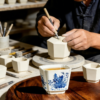
I met Master Chen, a third-generation artisan whose hands were perpetually stained with cobalt blue. He sat hunched over a tiny piece of white porcelain, his brush moving with the precision of a surgeon and the soul of a poet. “A lid holder,” he told me without looking up, “is the guardian of the pot’s dignity.” This story is for everyone who, like me, seeks to find the human touch in an increasingly digital and mass-produced world.
2. Why “Hand-Painted” Matters in the Age of Machines
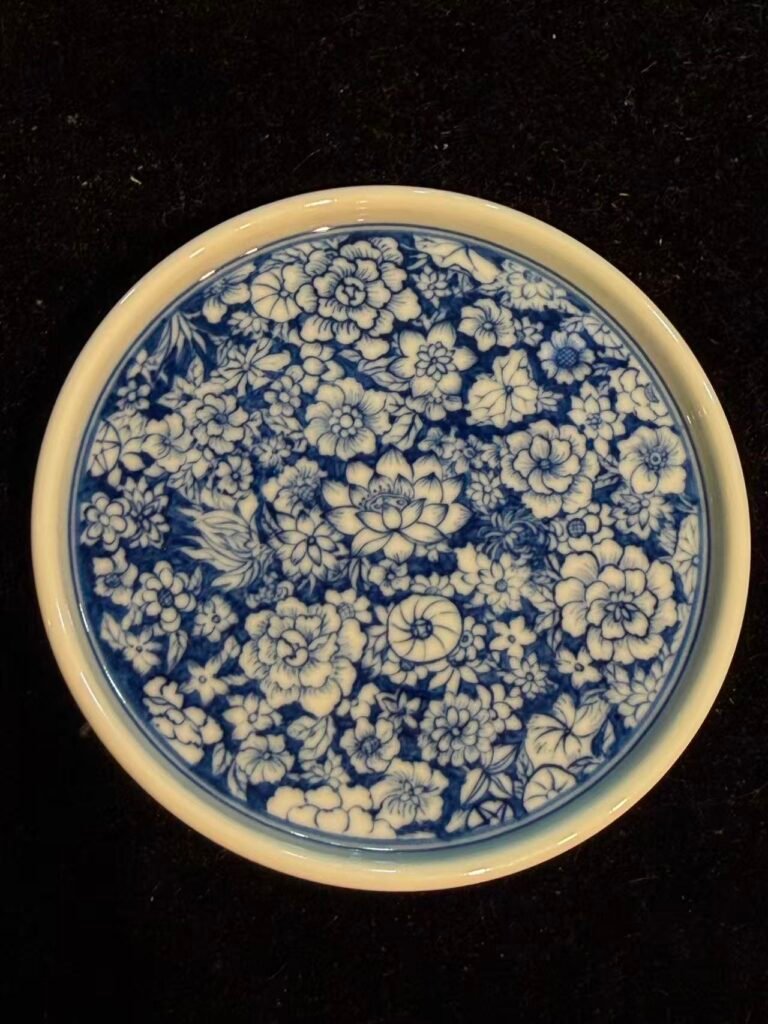
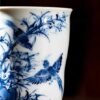
In your search for a premium tea accessory, you will encounter thousands of cheap, identical items. These are “decal” or “sticker” porcelain. They look perfect, but they are cold. A truly hand-crafted piece, however, carries “Qi” or life energy. When you look closely at a hand-painted motif, you see the subtle variations in the blue pigment—where the brush lingered, where the ink thinned out, and where the artisan breathed.
Google’s ranking systems now prioritize “helpful content” that reflects real human experience. Just as Google looks for authenticity, tea drinkers look for the “soul” of their ware. Genuine hand-painted ceramics are an investment in heritage. It supports the artisan’s life and ensures that the 1,000-year-old tradition of underglaze art doesn’t fade into history.
3. The Anatomy of a Perfect Porcelain Lid Holder
Before we dive into selection tips, we must understand what makes this object functional. A Blue and White Porcelain Lid Rest must balance three things: weight, height, and surface texture. A quality piece should be heavy enough to remain stable when a hot, damp lid is placed upon it, yet light enough to feel elegant in the hand.
The porcelain body, or “tire,” should be made of high-quality clay fired at temperatures exceeding 1300°C. This creates a vitrified, glass-like surface that won’t absorb tea stains or odors. This technical excellence is what separates a decorative trinket from a professional tea tool.
4. 7 Best Secrets to Selecting an Artisan Lid Rest
Choosing the right Blue and White Porcelain Lid Rest requires more than just an eye for beauty. Here are 7 tips I learned from the masters of Jingdezhen:
- Seek “Ink-Wash” Depth: High-quality cobalt blue should have layers. It shouldn’t look like a flat blue stamp; it should look like traditional Chinese ink painting with varying shades.
- Check the Foot Ring: Turn the piece over. The unglazed “foot” should feel as smooth as a baby’s skin. If it’s rough, it will scratch your expensive tea tray.
- Symmetry vs. Soul: Do not look for machine-like perfection. Slight irregularities in the hand-painted pattern are the “signature” of the artist.
- Sound Test: Gently flick the porcelain. It should produce a high-pitched, clear ring like a bell. This indicates a high firing temperature and no internal cracks.
- Glaze Purity: Look for “pinholes” or “orange peel” textures. While a few are natural in wood-fired kilns, a high-end piece should have a smooth, jade-like finish.
- Proportion: Your tea accessory should be roughly one-third the diameter of your teapot. Too large, and it dominates the table; too small, and it looks like an afterthought.
- The Artisan’s Mark: Look for a hand-written seal on the bottom. This connects the object to a specific kiln or individual, adding to its future collectible value. You can explore the fascinating evolution of these artisan marks and historic kilns through the British Museum’s Chinese Ceramics Collection.
5. Integrating the Ceramic Rest into Your Daily Tea Ritual
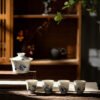
Imagine your morning. You boil the water, the steam rises, and you pour. When you remove the lid of your Zisha pot to smell the leaves, where does the lid go? If it goes on the table, the ritual is broken. But when you place it gently on your artisan holder, the ceremony remains intact. It is an act of respect—to the tea, to the pot, and to yourself.
In my own home, my ceramic rest sits at the “two o’clock” position. Its blue landscape painting serves as a visual anchor, a small window into a mountain scene while I navigate the stresses of modern life. This is why we choose hand-painted over mass-produced: it offers a moment of meditation.
6. Maintenance: Preserving the Heritage of Your Collection
Because the artwork is underglaze, the design is protected forever by a layer of glass. However, you must still care for it. Avoid using chemical detergents. A simple rinse with warm water after each session is enough. If tea stains build up, a gentle rub with baking soda and a soft cloth will restore its luster without damaging the artwork.
To build a truly harmonious tea setup, it is equally important to know how to match your rest with other utensils. Feel free to read our comprehensive guide on how to match your Kung Fu tea set components to create a cohesive aesthetic.
7. Conclusion: Finding the Soul in Small Objects
In the grand scheme of life, a lid holder is a small thing. But as the saying goes, “How we do anything is how we do everything.” By choosing a Blue and White Porcelain Lid Rest, you are choosing intentionality over convenience. You are choosing art over plastic.
Whether you are a seasoned collector or a beginner in the world of tea, I hope this guide helps you find a piece that resonates with your spirit. Remember, the best studio work isn’t the most expensive one—it’s the one that makes you pause, breathe, and appreciate the beauty of the present moment.

Add comment