
The Five Princes Returning Home Drunk Tea Tray | Masterpiece Art & Culture
In the realm of Chinese art, few paintings capture a moment of narrative and artistic brilliance quite like Ren Renfa’s “The Five Princes Returning Home Drunk.” This masterpiece, a vibrant window into the Tang Dynasty’s courtly life, has transcended its original medium to inspire a range of cultural artifacts. Among these, the “The Five Princes Returning Home Drunk” tea tray stands as a unique fusion of high art and daily ritual, allowing one to bring a piece of this historical narrative into the modern home. This article delves into the profound story behind the painting, the genius of its creator, and the exquisite craftsmanship of the tea tray it inspired.
The Masterpiece: A Glimpse into Tang Dynasty Fraternity
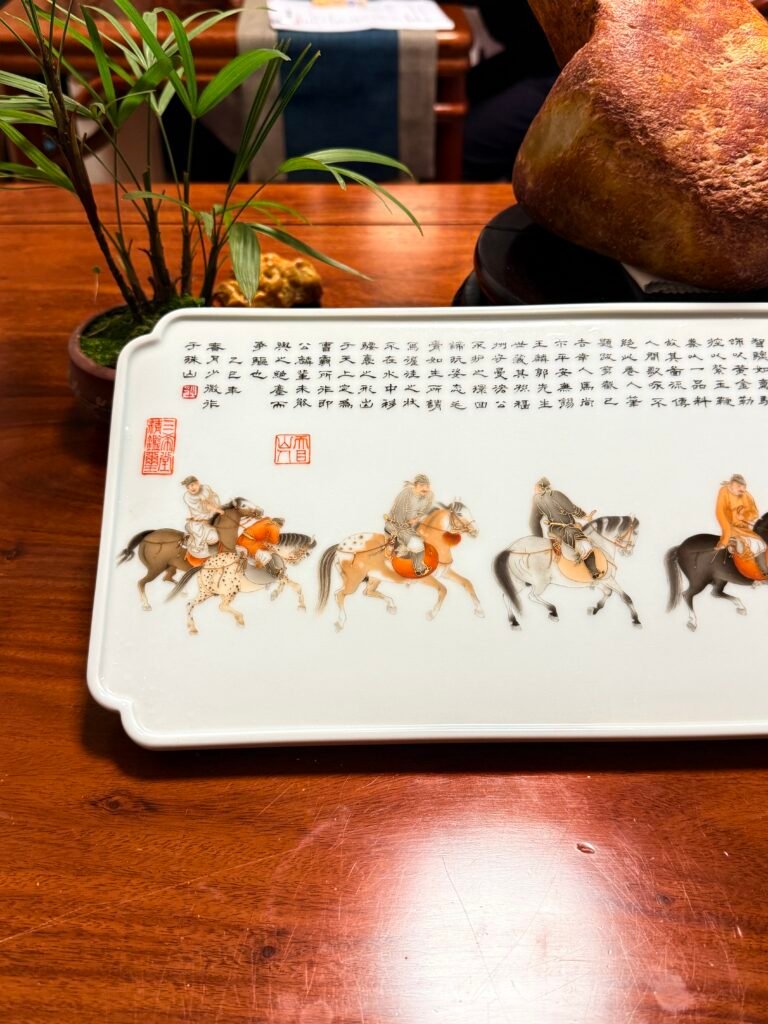
The original painting, created during the Yuan Dynasty, depicts a celebrated story from the early 8th century. It portrays Li Longji, who would later become the illustrious Emperor Xuanzong of Tang, and his four brothers—the Princes of Song, Shen, Qi, and Xue—returning home after a joyous banquet. The scene is one of uninhibited camaraderie and drunken revelry, a testament to the close bond the five princes shared in their youth. Historical records, such as the “Minghuang Zalu,” recount how they would often feast, play games, hunt, and enjoy each other’s company, a relationship later immortalized by Emperor Xuanzong in the “Hall of Floral Brilliance” (Hua E Lou), built to celebrate their fraternal love.
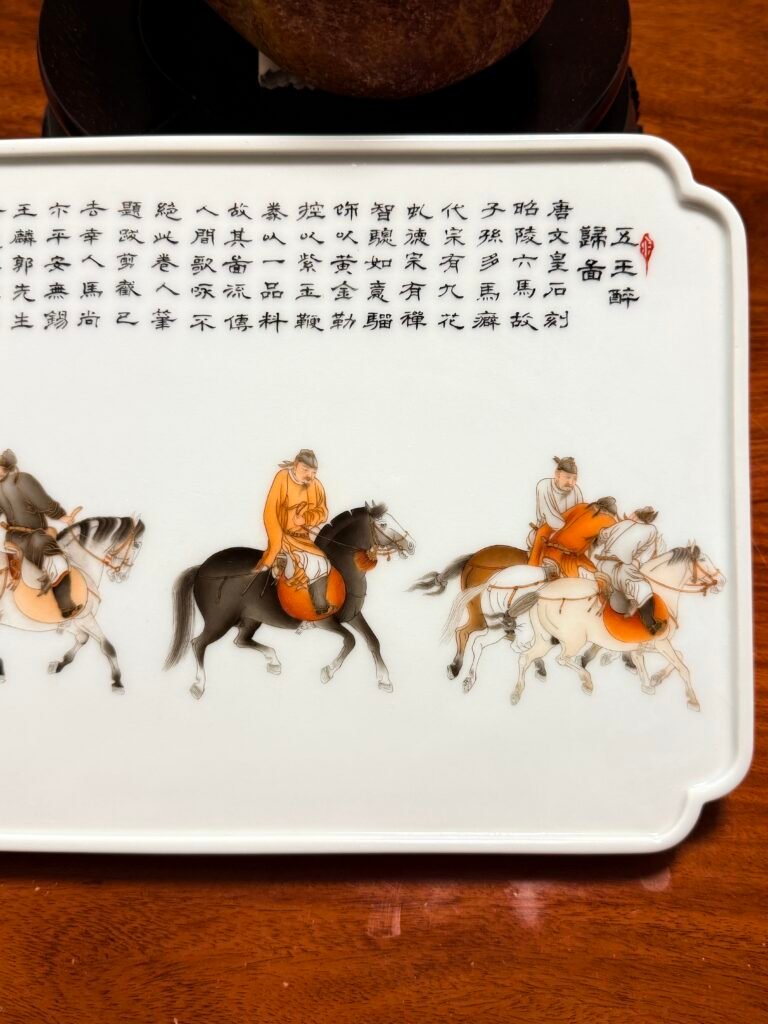
The painting is a dynamic composition of nine figures on nine horses. Each prince and his steed are rendered with meticulous detail, their individual personalities and states of inebriation vividly brought to life. Li Longji, clad in deep red, is shown being supported by two attendants, his intoxication evident. His brothers are depicted in various stages of drunkenness: one, the Prince of Song, rides with a flushed face; another, the Prince of Shen, leans precariously over his saddle, seemingly about to be sick, attended by a servant. The horses themselves are not mere background elements but are characters in their own right, each a celebrated breed from the Tang imperial stables, such as the famed “Zhao Ye Bai” (Shining White of the Night).
The brilliance of Ren Renfa’s work lies not just in its technical execution but in its subtle political and cultural commentary. By celebrating the theme of “fraternal love” (孝悌, xiào tì), a core tenet of Confucian ethics, the painting resonated deeply with the values of the Yuan court and subsequent dynasties. It served as an idealized vision of harmony, a stark contrast to the often-brutal power struggles inherent in imperial succession.
The Artist: Ren Renfa, the Master of Horses
To appreciate the tea tray, one must first understand the artist behind the original masterpiece. Ren Renfa (1254–1327) was a prominent figure in the early Yuan Dynasty, a successful official who served as the Director of Water Conservancy. However, he is most celebrated today for his exceptional skill as a painter, particularly of horses.
In the Yuan Dynasty, a period marked by a “return to antiquity” in the arts, Ren Renfa looked back to the grand traditions of the Tang Dynasty for inspiration. His dedication to capturing the essence of a horse was unparalleled. He would spend countless hours observing the animals in imperial stables, studying their anatomy, musculature, and spirit. This intense study allowed him to paint horses that were not only anatomically correct but also imbued with a sense of vitality and noble character. His works are often compared to those of the great Tang horse painter, Cao Ba.
“The Five Princes Returning Home Drunk” is considered one of his crowning achievements. The painting demonstrates his mastery in rendering both human figures and animals with equal skill. The horses are depicted with powerful, flowing lines, their coats rendered in rich colors that highlight their distinct breeds and temperaments. The artwork’s journey through history is as dramatic as the scene it portrays. Once part of the Qing imperial collection, it was smuggled out of the Forbidden City by the last emperor, Puyi, and spent decades abroad before its triumphant return to China. In 2016, it fetched a record-breaking price at auction, solidifying its status as a national treasure. Today, it is housed in the Suning Art Museum.
The Tea Tray: Where Art Meets Ritual
The “The Five Princes Returning Home Drunk” tea tray is more than a functional object; it is a tribute to this monumental work of art. Crafted with precision, the tea tray serves as a canvas, bringing the painting’s narrative and aesthetic into the intimate setting of a tea ceremony.
Design and Craftsmanship
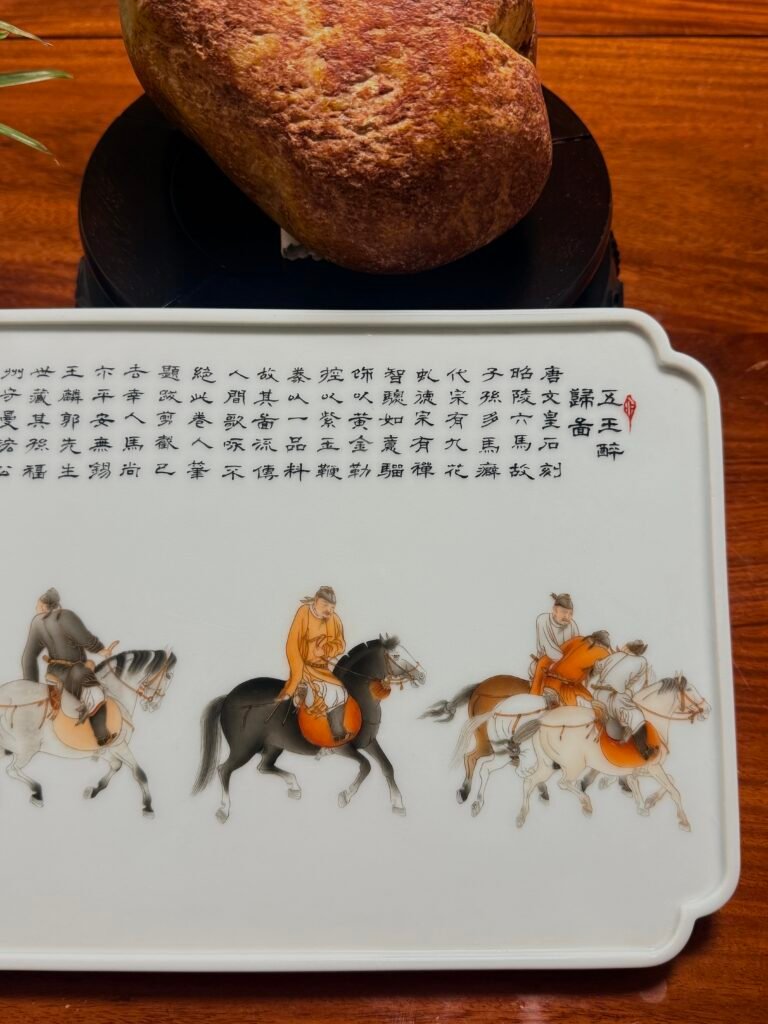
The design of the tea tray faithfully reproduces the key elements of Ren Renfa’s painting. The central focus is the procession of the five princes and their attendants, their figures elegantly etched, carved, or printed onto the surface. The dynamic movement of the horses, the rich colors of the princes’ robes, and the expressive details of their drunken states are all carefully captured. High-quality tea trays are often made from durable materials like bamboo, wood, or high-fired ceramic, ensuring they can withstand the daily rituals of tea preparation while preserving the beauty of the artwork.
Symbolism and Cultural Significance
Using this tea tray elevates the act of drinking tea from a simple routine to a cultural experience. The theme of fraternal love and joyful gathering depicted on the tray adds a layer of meaning to the tea ceremony, which is itself a social ritual centered on hospitality, respect, and connection. Serving tea to friends and family using this tray becomes a modern echo of the princes’ ancient banquet, a celebration of companionship and shared moments. It transforms the tea table into a space for storytelling and appreciation of classical Chinese culture.
Aesthetic Appeal
Aesthetically, the tea tray is a stunning piece. The intricate details of the painting provide a rich visual texture that complements the simple elegance of a tea set. Whether placed in a traditional tea room or a modern living space, it serves as a sophisticated conversation piece, reflecting the owner’s appreciation for art and history. The combination of the painting’s classical beauty with the practical function of a tea tray creates a harmonious object that is both beautiful and useful.
In conclusion, the “The Five Princes Returning Home Drunk” tea tray is a remarkable artifact that bridges centuries of Chinese art and culture. It allows art enthusiasts and tea lovers alike to own a piece of history, to engage with a masterpiece on a personal level, and to infuse their daily rituals with the timeless elegance of the Tang Dynasty. It is a testament to the enduring power of great art to inspire, to connect, and to enrich our lives.
Add comment