
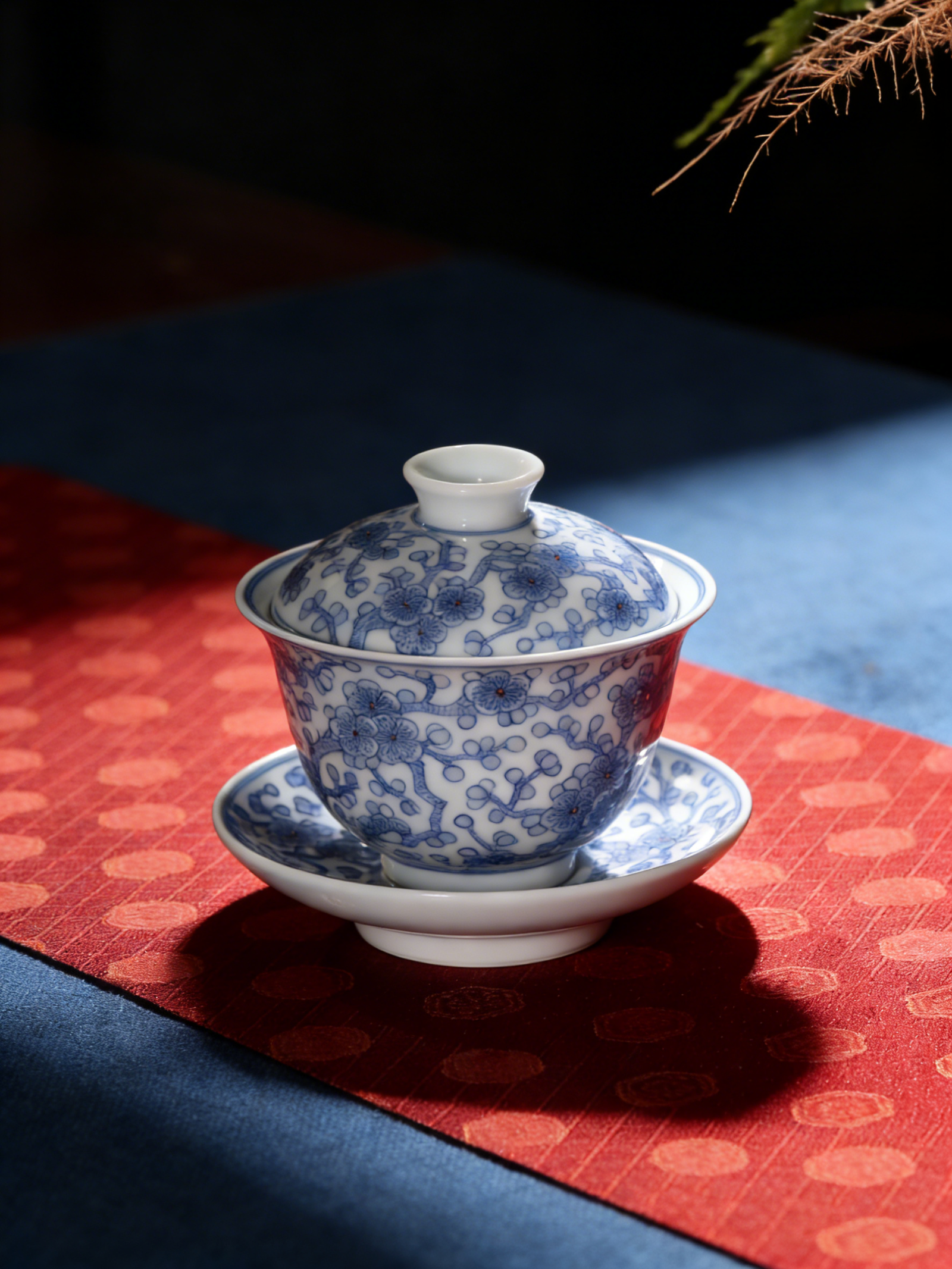
Inside the Kiln: A Maker’s Journey with Handmade Blue and White Porcelain in Jingdezhen
The clay never lies.
That is the first thing I learned when I was just a boy, standing knee-high to a workbench in this city of fire and earth, Jingdezhen. You can try to rush it, you can try to force it, but if your heart isn’t in the tip of the brush, the clay will tell the world.
My hands are stained. They are almost always stained with the cobalt blue that defines my life. To the outside world, we call it Blue and White Porcelain, a term that sounds elegant and distant. But to me, it is simply the dialogue between my hand and the earth.
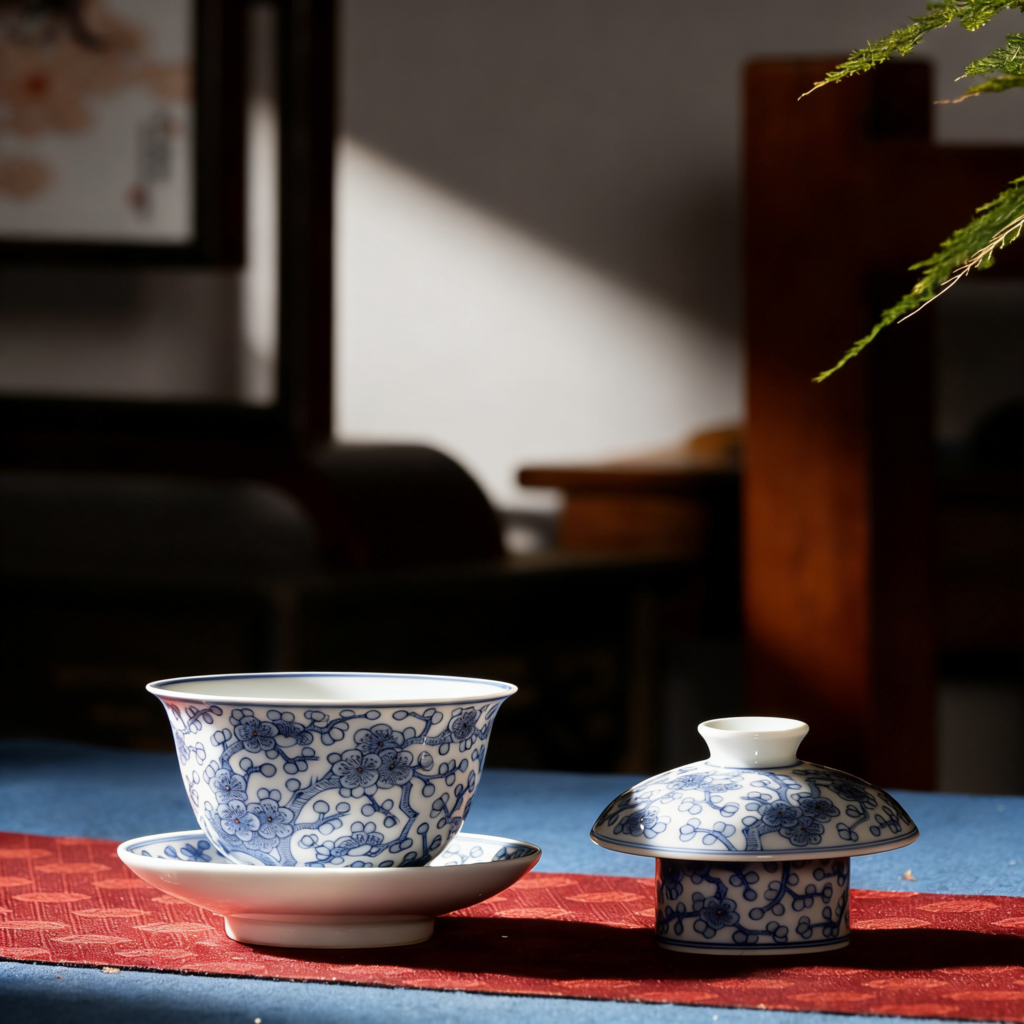
People often ask me why I stay here, in the humidity and the dust, when the world outside is moving so fast. They see the factories churning out perfect, identical plates. They see the decals being slapped onto ceramic bodies in seconds. But they don’t feel the resistance of the brush against the raw, unglazed body. They don’t know the terror and the thrill of painting on unfired clay, where one slip of the hand, one tremor of hesitation, ruins weeks of work. There is no “undo” button here. There is only the moment.
The Weight of the Brush
When I sit at my wheel or my painting desk, the noise of the city fades. Jingdezhen is a busy place now, full of tourists and shipping trucks, but inside the studio, there is only silence.
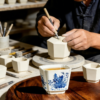
I pick up the brush. It is not like a Western paintbrush; it is stiff, made of wolf hair or sheep hair, designed to hold just enough pigment but release it with pressure. The pigment itself is ground stone—cobalt. It looks black before it goes into the kiln. It is only after the fire, reaching temperatures of over 1300 degrees Celsius, that it reveals its true soul: that deep, piercing, tranquil blue.
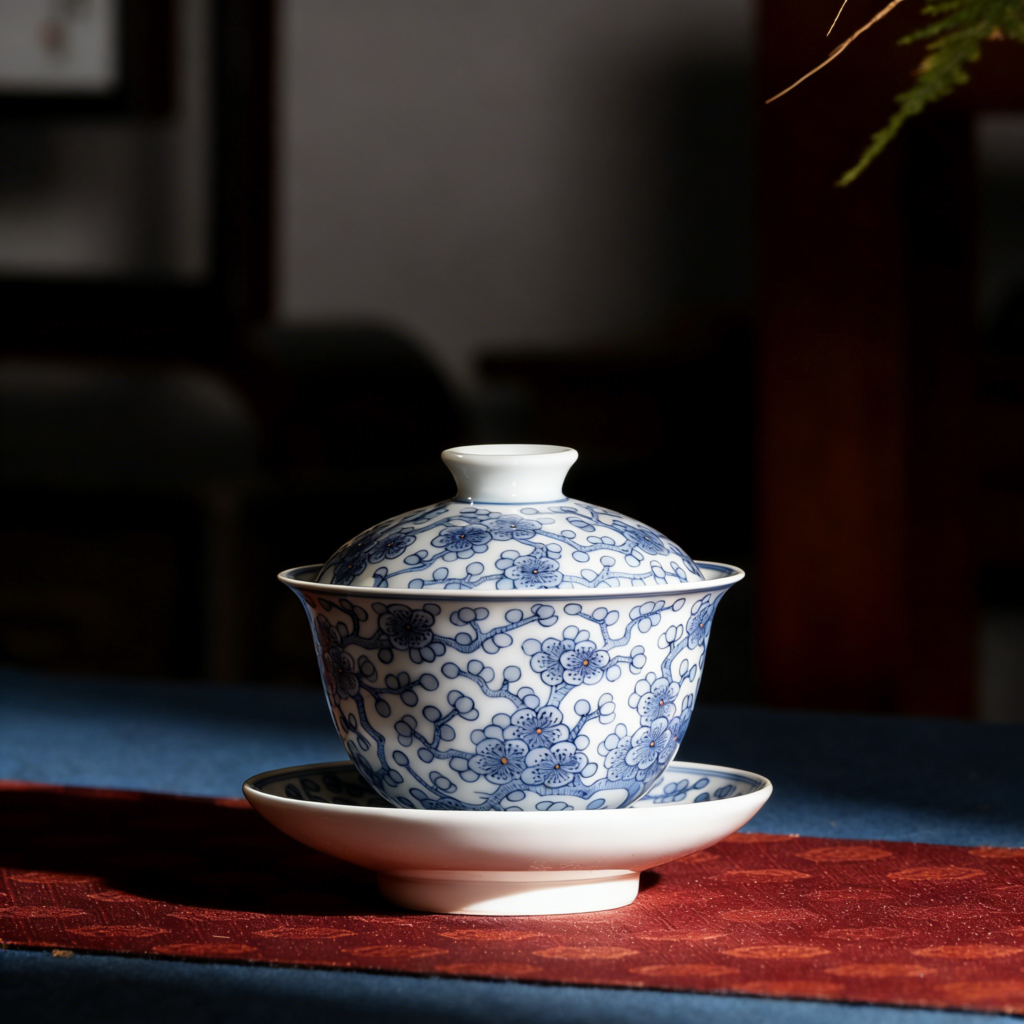
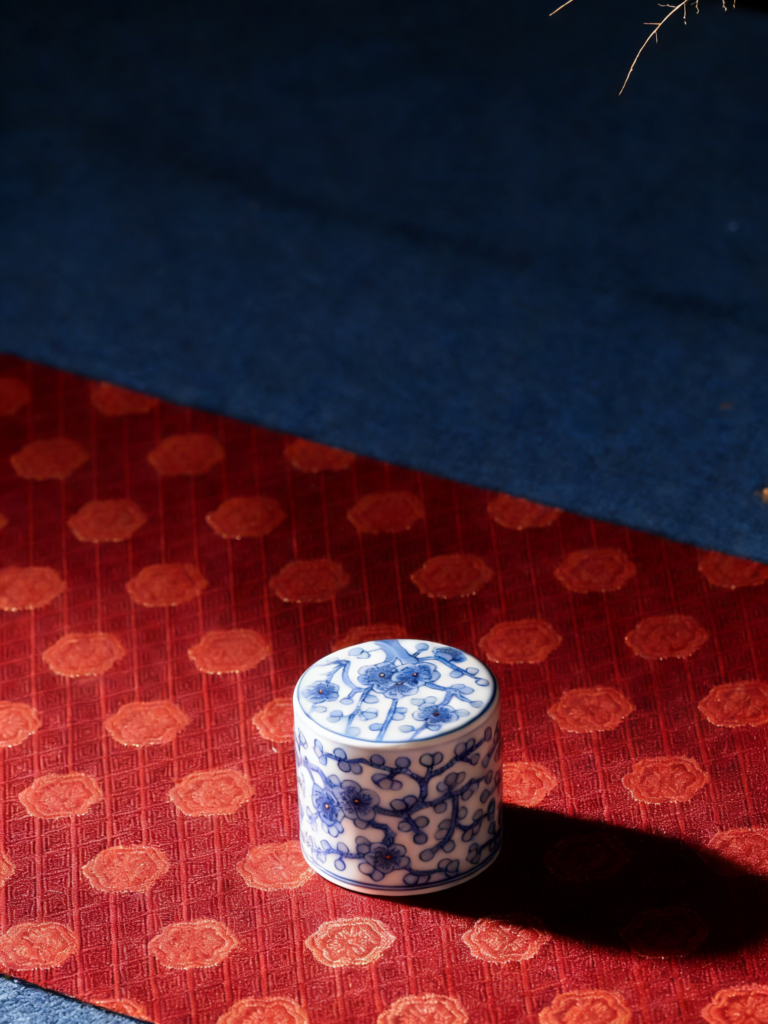
This is handmade. Not just “handmade” in the marketing sense of the word, where a machine does 90% of the work and a human touches it at the end. I mean the sweat and the breath. When I paint a plum blossom, I am not just drawing a flower. I am thinking of the winter, of resilience, of the cold wind. If I am angry, the lines look angry. If I am calm, the branches flow like water. The porcelain captures my emotion and locks it in time, forever.
The City of Porcelain
You cannot talk about this craft without talking about the soil we stand on. Jingdezhen is not just a location; it is an ingredient. For over a thousand years, the kaolin clay found here has been the gold standard of the ceramic world. It is what allowed the Song Dynasty emperors to demand perfection. It is what allows us, today, to create vessels that are as white as jade and as resonant as a bell.
I remember my master telling me, “The clay has a memory.” I didn’t understand him then. I do now. When I center a lump of clay on the wheel, I can feel the history in it. I am shaping the same material that artisans shaped centuries ago. The water, the fire, the wind—it is all part of the same cycle.
Why Handmade Matters
In a world of algorithms and mass production, why does a handmade cup matter?
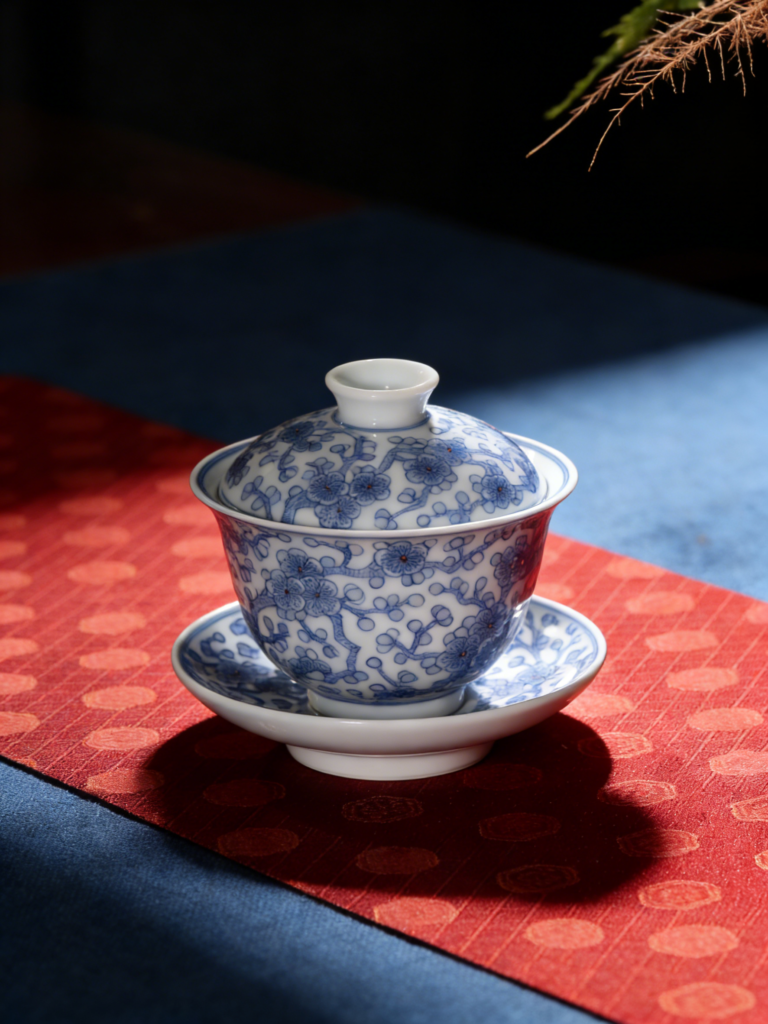
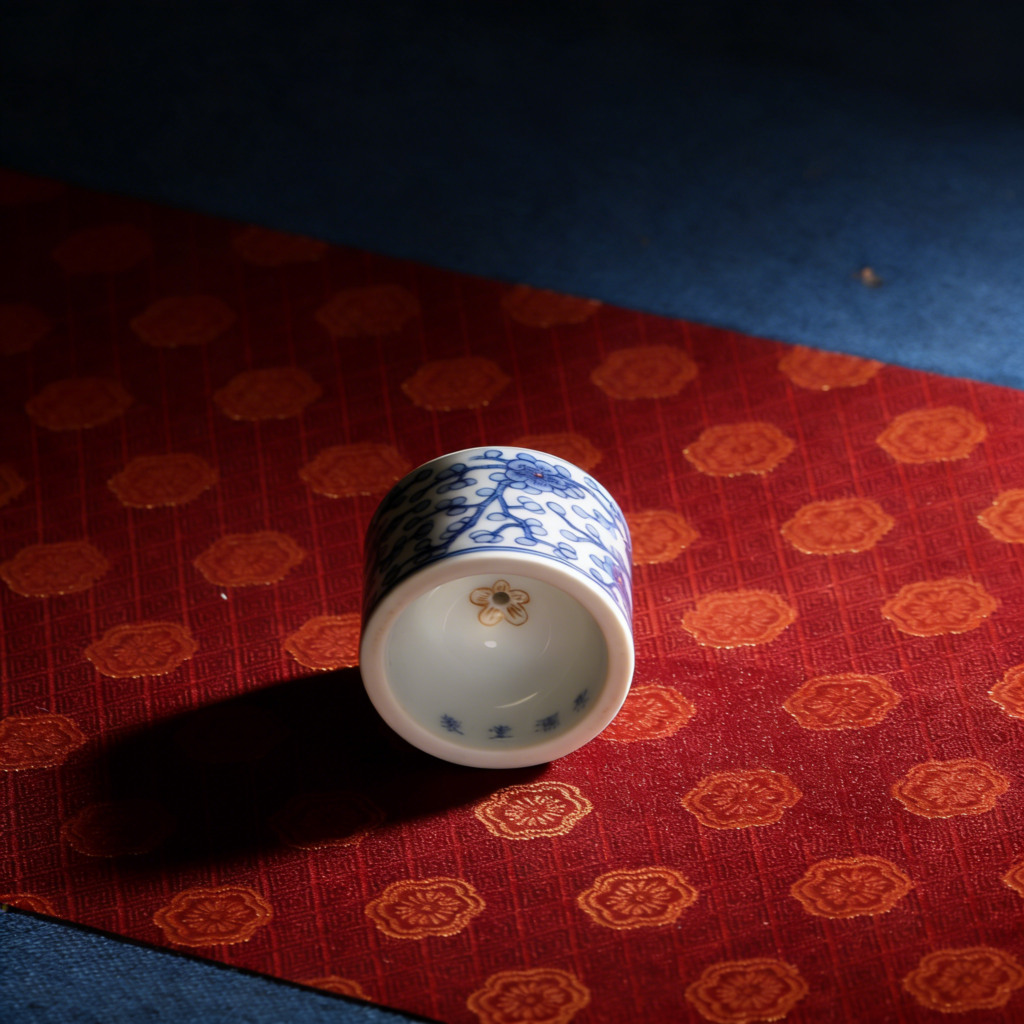
I believe it is because we are starving for connection. When you drink tea from a machine-made mug, you are drinking from a copy of a copy. But when you hold a piece of Blue and White Porcelain that I have thrown and painted, you are holding a specific moment in my life. You can see the variation in the blue where the brush lifted. You can feel the slight texture where my fingers trimmed the foot.
It is imperfect, and that is why it is beautiful.
I recently finished a set of tea bowls. I spent days on the underglaze painting, layering the blue to create depth, making the clouds look like they were moving. When they came out of the kiln, one had a tiny spot where the glaze had pooled. A factory would have smashed it. I kept it. It made the piece unique. It made it real.
A Legacy in Blue
I don’t know how many more years I have at this bench. My eyes aren’t as sharp as they used to be, and my back aches when the humidity rises. But the urge to create hasn’t faded. If anything, it has grown stronger.
Every time I load the kiln, I feel a mix of fear and hope. We call it “waiting for the sky to open.” Because until the kiln cools and we open the door, we don’t truly know what we have made. The fire is the final artist.
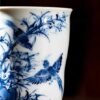
If you are reading this, and you hold a piece of my work, or work from any of my brothers and sisters here in Jingdezhen, please take a moment to look closely. Trace the lines with your finger. That blue line isn’t just ink. It is a heartbeat. It is a story of a city, a fire, and a life dedicated to the art of Blue and White Porcelain.
Add comment