
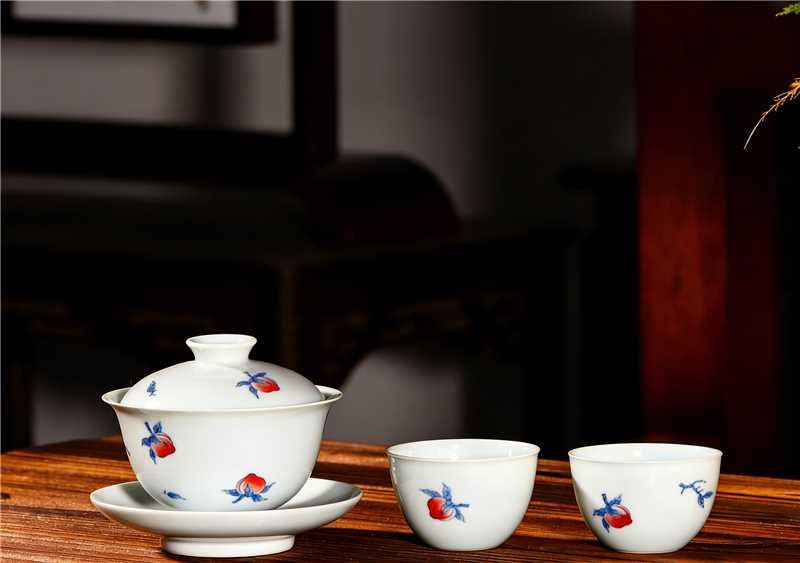
Jingdezhen Hand-Painted Longevity Peach Porcelain Tea Set – Complete Gongfu Teaware with Gaiwan, Cups & Tea Wash
The Timeless Elegance of the Longevity Peach Tea Set
In the sophisticated world of tea connoisseurship, the vessel is never merely a container. It is the stage upon which the drama of the tea leaf unfolds, a partner in the alchemy of heat and water. Among the vast universe of ceramics, few creations command the reverence and admiration accorded to a masterpiece from the kilns of Jingdezhen. When this legendary craftsmanship is united with the auspicious symbolism of the longevity peach, the result is a Jingdezhen porcelain tea set that transcends utility to become a vessel of art, history, and profound cultural meaning. This article delves deep into the allure of these exquisite sets, exploring why they remain the pinnacle of teaware for collectors and tea lovers alike.
The Imperial Legacy of Jingdezhen Porcelain
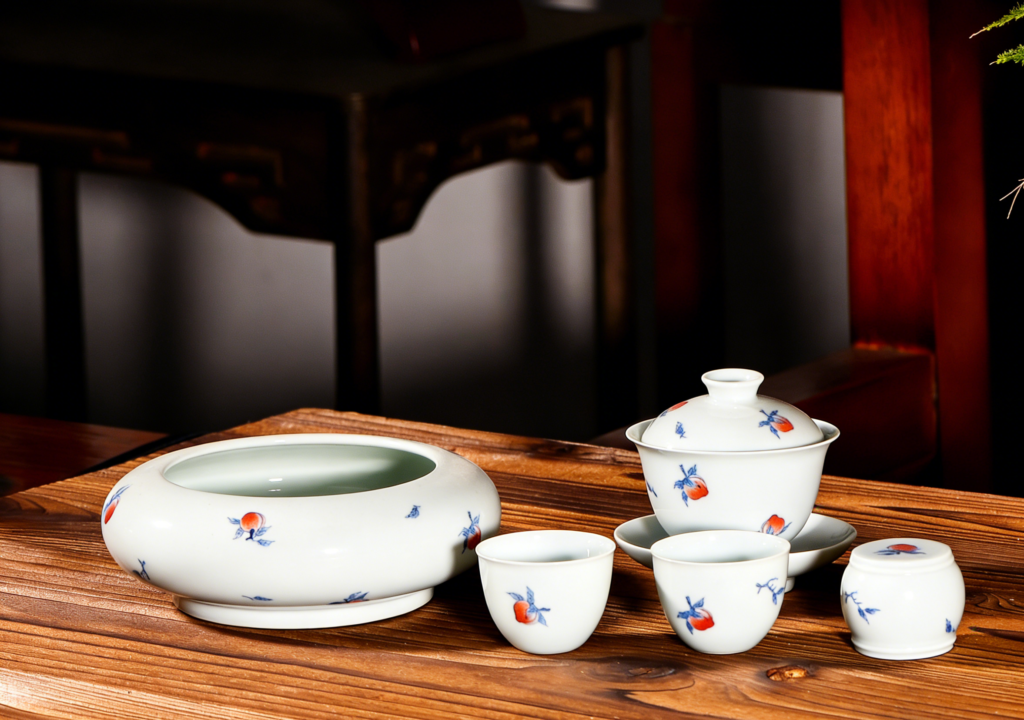
To truly appreciate a Jingdezhen porcelain tea set, one must understand the weight of history held within its walls. For over a millennium, the city of Jingdezhen in Jiangxi province has been the undisputed porcelain capital of the world. Its name is synonymous with perfection. The secret lies in the local earth—a unique combination of kaolin and petuntse (china stone). This specific geological blend allows the clay to withstand the blistering heat of the kiln, fusing into a material that is remarkably white, hard, and translucent.
Unlike the heavy, opaque stoneware common in other traditions, authentic Jingdezhen porcelain possesses a delicate resonance. When struck gently, it sings with a clear, bell-like tone. This “musical” quality is often the first test of authenticity for collectors. The firing process is an art form in itself, requiring precise temperature control to achieve the signature “jade-like” texture. The resulting body is thin yet durable, allowing heat to transfer efficiently without burning the fingers, a crucial feature for high-level gongfu tea brewing. Owning a piece of Jingdezhen porcelain is not just owning a cup; it is possessing a fragment of imperial history, as these kilns once produced the wares exclusively for the Forbidden City.
The Mythology of the Longevity Peach
The decoration on these tea sets is far more than mere ornamentation; it is a visual language of blessings. The central motif, the longevity peach, is deeply rooted in Chinese mythology and folklore. The legend originates from the Queen Mother of Heaven (Xi Wang Mu), a powerful Taoist deity who resided in the Kunlun Mountains. In her celestial garden grew the Peaches of Immortality, which ripened only once every three thousand years. It was said that consuming one of these magical fruits would grant the eater eternal life and perpetual youth.
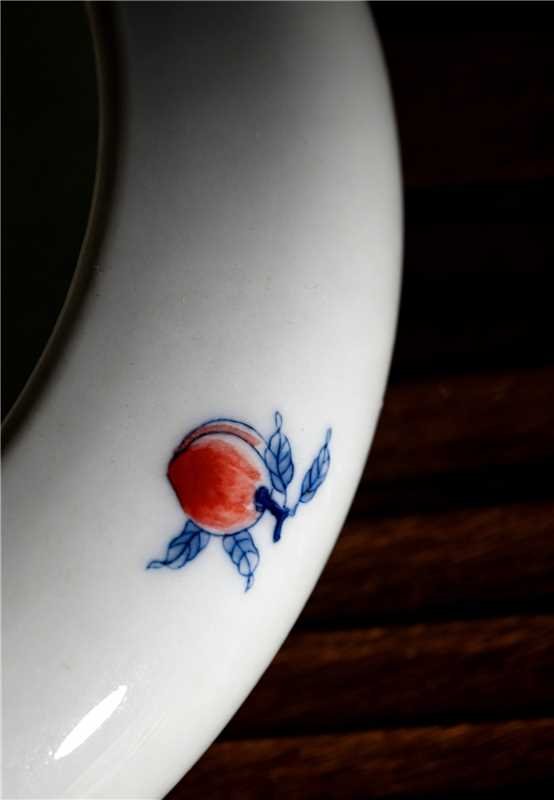
This myth became so culturally significant that the peach evolved into the ultimate symbol of health and long life. In traditional art, the peach is rarely depicted realistically; instead, it is stylized to emphasize its heart shape and vibrant color. When an artist paints a longevity peach on a tea set, they are imbuing the object with a wish for the user’s well-being. It is a common and deeply respectful gift for birthdays, particularly for elders, symbolizing a hope that their life will be as sweet and enduring as the mythical fruit. The presence of the longevity peach transforms a simple tea break into a ritual of vitality and gratitude.
The Art of Underglaze Red and Famille Rose
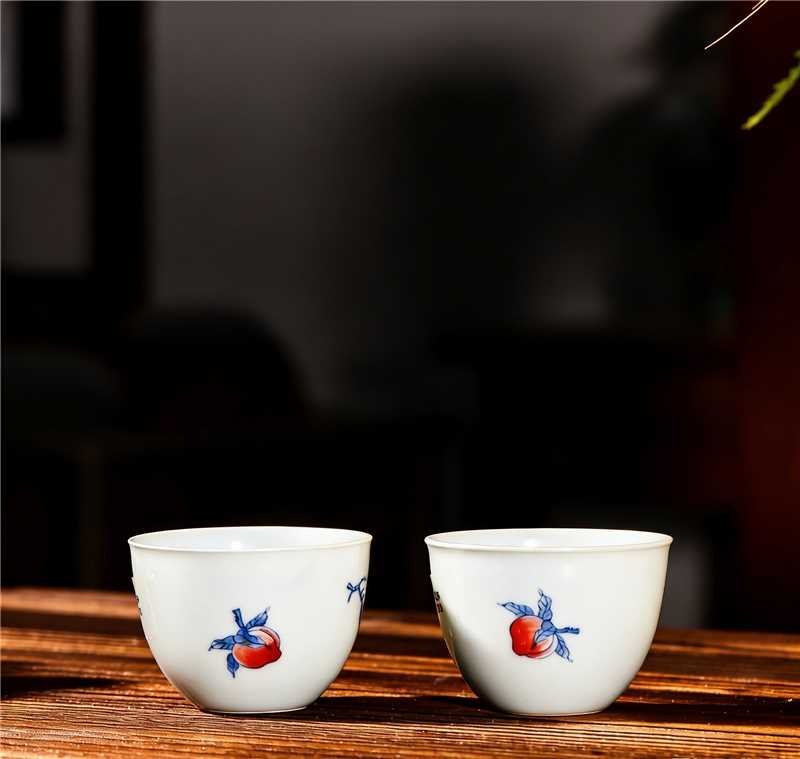
The creation of a longevity peach tea set involves masterful painting techniques that have been refined over centuries. Two styles are particularly prominent in high-end Jingdezhen porcelain. The first is Underglaze Red (Youlihong), a technique that dates back to the Yuan dynasty. This is notoriously difficult to master because copper oxide, the pigment used, is extremely sensitive to temperature changes in the kiln. A successful firing results in a rich, deep red that sits beneath the clear glaze, appearing vibrant yet protected, much like a jewel.
Alternatively, many longevity peach sets utilize the Famille Rose (Fencai) palette. This style, which flourished during the Qing dynasty, allows for a softer, more graduated range of colors. The artist can paint the pink blush of the peach fading into white, creating a three-dimensional, luscious effect that looks almost edible. The leaves are rendered in varying shades of emerald and olive green, capturing the movement of wind through the branches. This level of detail requires a steady hand and years of training. Each brushstroke on a piece of teaware is a testament to the artisan’s dedication, making every set a unique original rather than a mass-produced copy.
The Sensory Experience of Tea
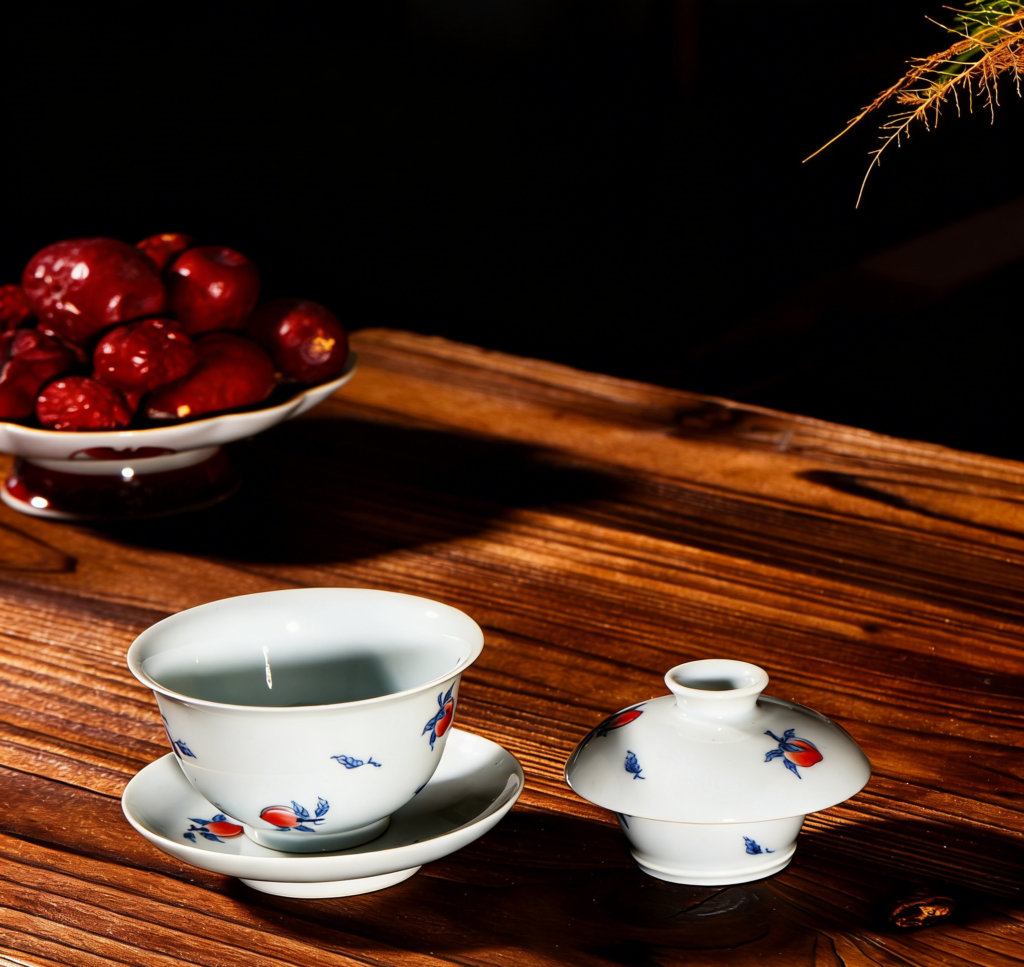
How does the vessel affect the tea? This is a question often debated among enthusiasts. The consensus is that Jingdezhen porcelain offers a neutral canvas that allows the true character of the tea to shine. Unlike unglazed clay (such as Yixing), which absorbs flavors over time, high-fired porcelain does not retain the scent or taste of previous brews. This makes a longevity peach tea set incredibly versatile. You can brew a delicate green tea in the morning and a robust aged puerh in the afternoon without the flavors mingling.
Furthermore, the tactile experience is unmatched. The rim of a Jingdezhen cup is often finished to be incredibly thin, ensuring that the tea flows smoothly onto the tongue without the interference of a thick ceramic edge. The white interior of the cup allows the drinker to appreciate the liquor’s color—the golden hue of an oolong or the deep amber of a black tea—against the pristine background. When holding the gaiwan (lidded bowl) of the set, the balance is precise; the knob on the lid stays cool, and the roll of the rim fits the fingers perfectly. This ergonomic design turns the physical act of pouring into a graceful, meditative dance.
An Heirloom for Generations
In an era dominated by disposable goods and mass manufacturing, a hand-painted Jingdezhen porcelain tea set stands as a defiant monument to slow craftsmanship. It is an object meant to be used, cherished, and eventually passed down. The durability of the high-fired glaze means that, with proper care, the vibrant colors of the longevity peach will not fade, and the porcelain will not chip easily.
When you purchase such a set, you are not just buying teaware; you are acquiring an heirloom. It is a piece that carries the warmth of every tea ceremony shared with friends and family. It becomes a witness to conversations, celebrations, and quiet moments of reflection. The wish embedded in the longevity peach motif extends beyond the individual; it blesses the home and the lineage of those who inherit it.
Conclusion
The journey of a longevity peach tea set—from the mineral-rich soil of Jingdezhen, through the fiery transformation of the kiln, to the delicate brush of the painter—is a marvel of human ingenuity and artistic spirit. It combines the physical perfection of Jingdezhen porcelain with the spiritual depth of Chinese symbolism. For the tea drinker, it offers a way to elevate a daily habit into a ceremony of beauty and meaning. In every sip poured from these exquisite vessels, one tastes not just the tea, but the history, the art, and the enduring wish for a long and healthy life.

Add comment