
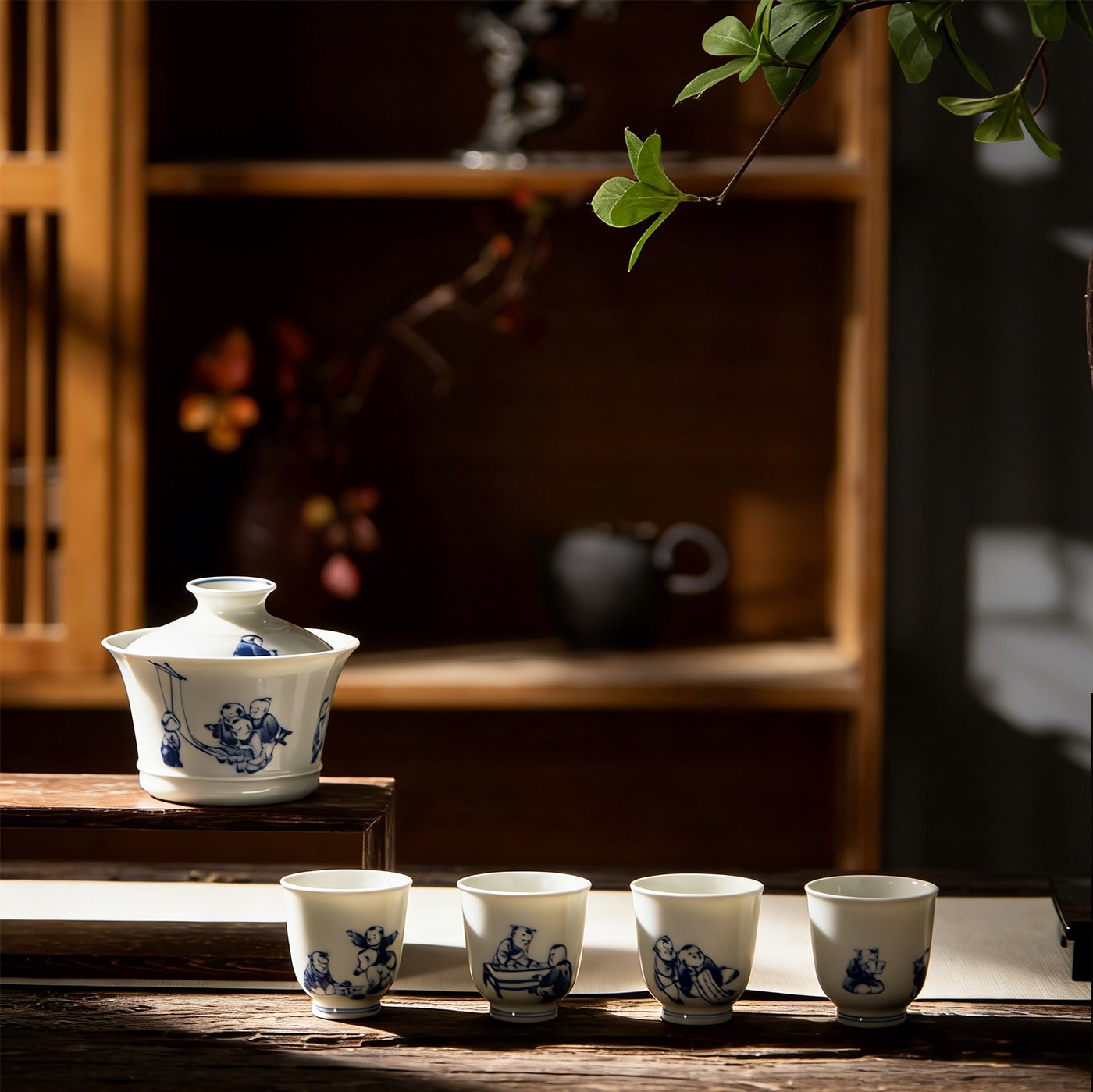
Hand-Painted Blue and White Porcelain Gaiwan Set with Children Motif
The Soul of the Teapot: A Story of My Hand-Painted Blue and White Porcelain Gaiwan Set
There is a quiet moment, just before the sun rises, when the world is still and the only sound is the soft clink of porcelain. It is in this moment that I reach for my favorite tea set — not just any set, but one that holds stories within its glaze, one that speaks of childhood, of laughter, and of the enduring beauty of handcrafted art.
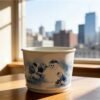
I remember the first time I saw it. It was displayed on a wooden shelf in a small shop in Jingdezhen, the porcelain capital of China. The light from the window caught the curve of the gaiwan, and I saw it — a group of children, painted in cobalt blue, playing a game of chess. One child leaned forward, his brow furrowed in concentration; another sat back, a mischievous grin on his face. It was not just a tea bowl; it was a scene from a life I had never lived, yet felt deeply familiar.
I bought it that day, not knowing then that it would become the centerpiece of my daily ritual. But as I began to use it, I realized that this was more than a vessel for tea. It was a connection to a tradition that spans centuries, to the artisans who spent their lives perfecting the art of blue and white porcelain, and to the stories that these ceramics carry.
The History Behind the Hand-Painted Blue and White Porcelain Gaiwan Set
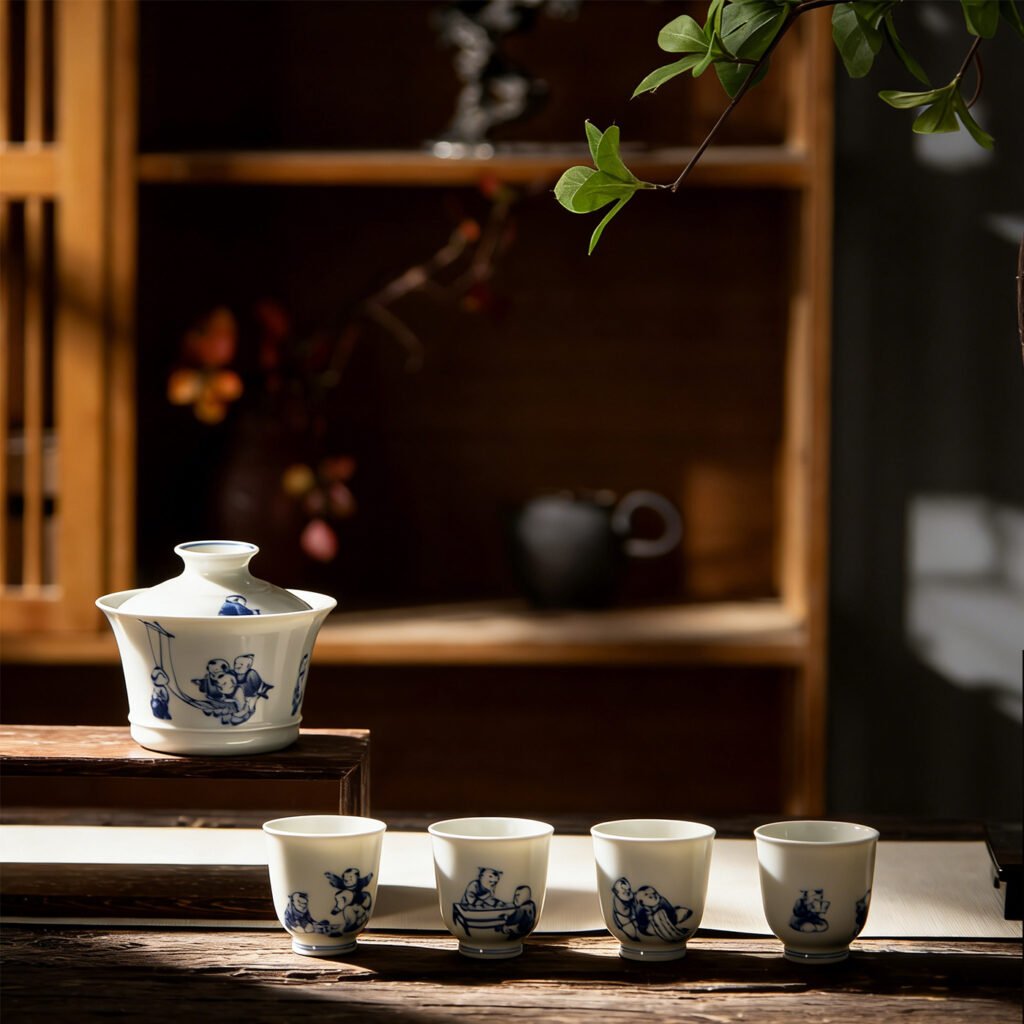
The history of blue and white porcelain is a long one. It began in the Tang Dynasty, but it was during the Yuan Dynasty that it truly flourished. The cobalt blue pigment, imported from Persia, was painted onto the porcelain body, then covered with a clear glaze and fired at high temperatures. The result was a striking contrast of blue on white, a design that would eventually travel the world, influencing ceramic traditions from Japan to Europe.
But what makes this particular set special is not just its color, but its subject matter. The children depicted on the gaiwan are not merely decorative; they are symbolic. In Chinese culture, children represent joy, prosperity, and the continuity of life. The scenes of children playing, studying, or engaging in games are not just whimsical; they are expressions of hope for a bright future.
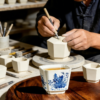
I often wonder about the artisan who painted this set. Did he have children of his own? Did he smile as he painted the chess game, remembering a moment from his own childhood? The hand-painted nature of the design means that no two pieces are exactly alike. Each stroke of the brush is a testament to the human hand, to the imperfections that make art beautiful.
The Tactile Experience of Using a Porcelain Gaiwan
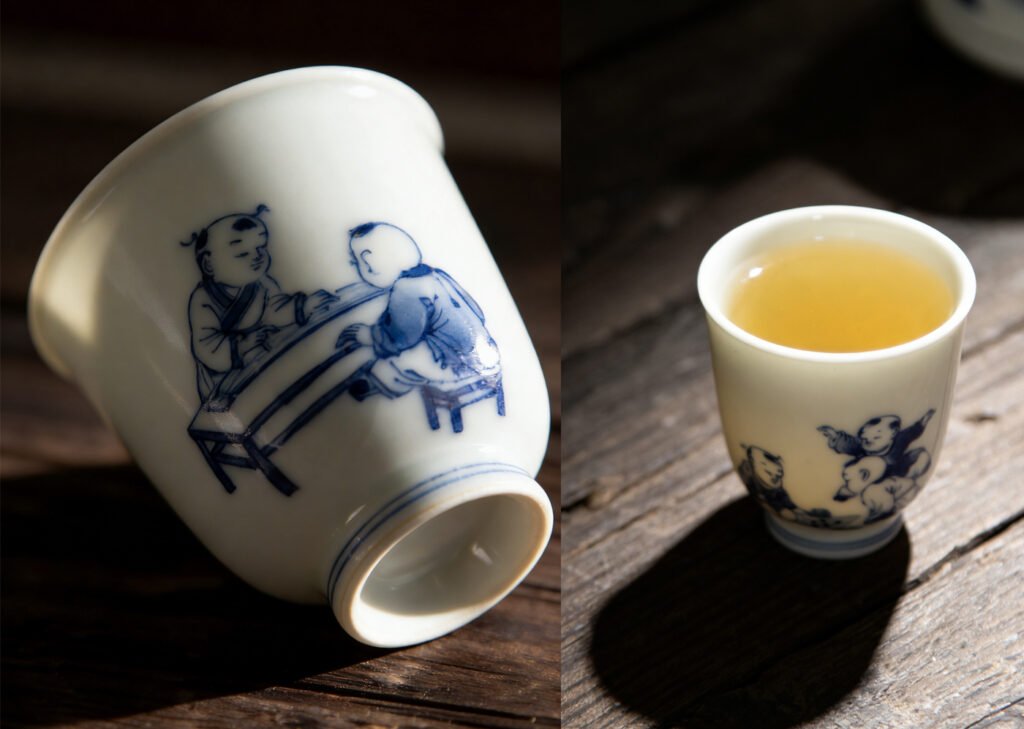
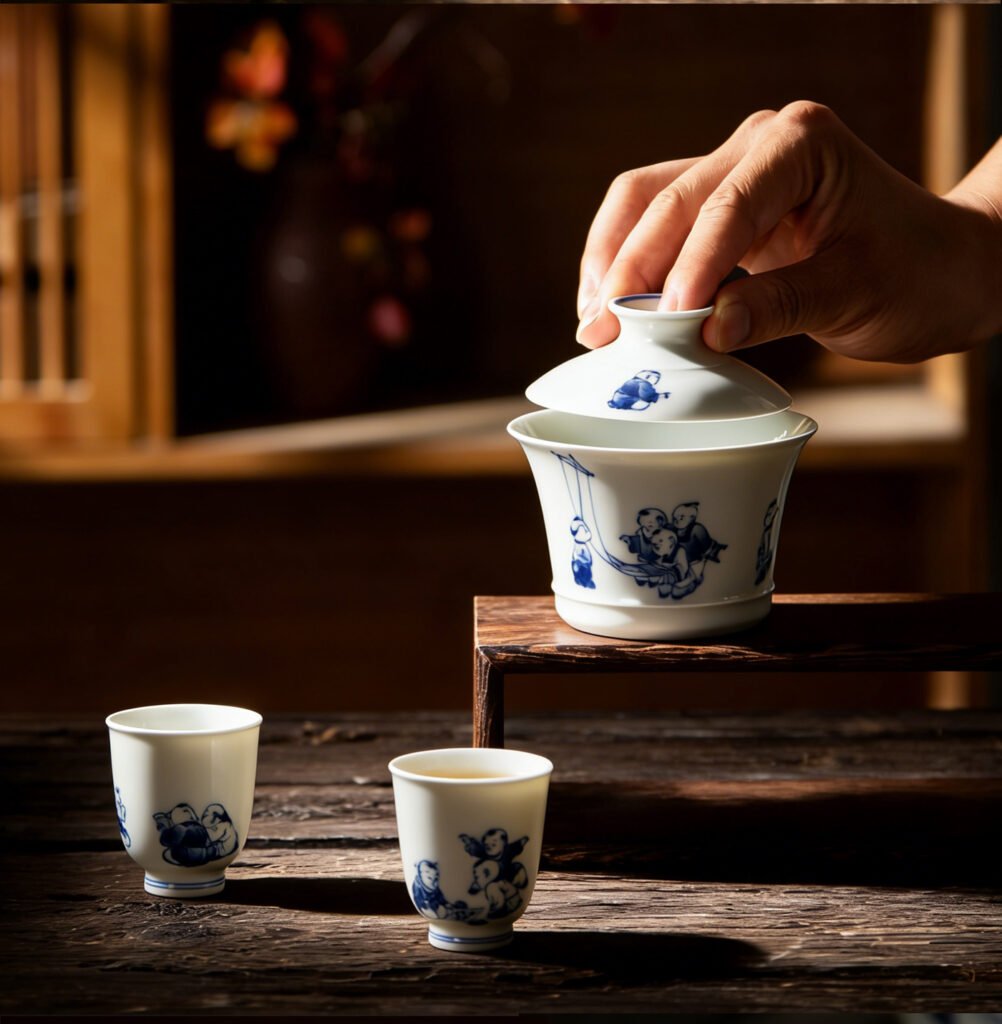
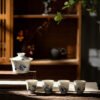
Using the gaiwan is a tactile experience. The porcelain is smooth, cool to the touch, yet it holds the heat of the tea without burning my fingers. The lid fits snugly over the bowl, allowing me to steep the tea leaves to perfection. When I pour the tea into the small cups, I see the children again, their faces reflected in the amber liquid.
There is a rhythm to the tea ceremony. The rinse of the leaves, the pour of the water, the steeping, the serving. Each step is deliberate, a meditation on patience and presence. And in this rhythm, I find a connection to the past. I think of the generations of tea drinkers who have used similar vessels, who have found solace in the same ritual.
The cups are small, designed for sipping, not gulping. They are meant to be held in one hand, the warmth seeping into the fingers. The tea, when it is ready, is a golden color, fragrant and smooth. I take a sip, and the flavor unfolds — floral, slightly sweet, with a lingering finish. It is a tea that demands attention, that rewards the drinker who takes the time to savor it.
Why This Hand-Painted Blue and White Porcelain Gaiwan Set is a Masterpiece
I often use this set when I have guests. There is something about sharing tea that brings people together. We sit around the table, the gaiwan in the center, and we talk. The children on the porcelain seem to watch over us, silent observers of our conversation. It is a moment of connection, of shared experience, of the simple joy of being together.
The set is not just for special occasions, though. I use it every day, even when I am alone. It is a reminder to slow down, to appreciate the small things. The beauty of the porcelain, the aroma of the tea, the warmth of the cup — these are the things that make life rich.
I have come to realize that the true value of this tea set is not in its material worth, but in the experiences it facilitates. It is a vessel for more than tea; it is a vessel for memories, for connection, for the quiet moments that make up a life.
As I sit here, the sun now fully risen, I look at the gaiwan. The children are still there, frozen in time, yet full of life. I pour another cup of tea, and I smile. The day has begun, and I am ready for it.

Add comment