
The Silent Elegance of Clay: A Story of Heritage and Art
The aroma of roasted oolong tea still lingers in my memory, a scent inextricably linked to the sound of a porcelain cup gently clinking against a saucer. It was in my grandfather’s study, a room filled with the scent of old books and camphor wood, that I first encountered the object of my obsession. He didn’t just hand me a cup; he passed me a piece of history.
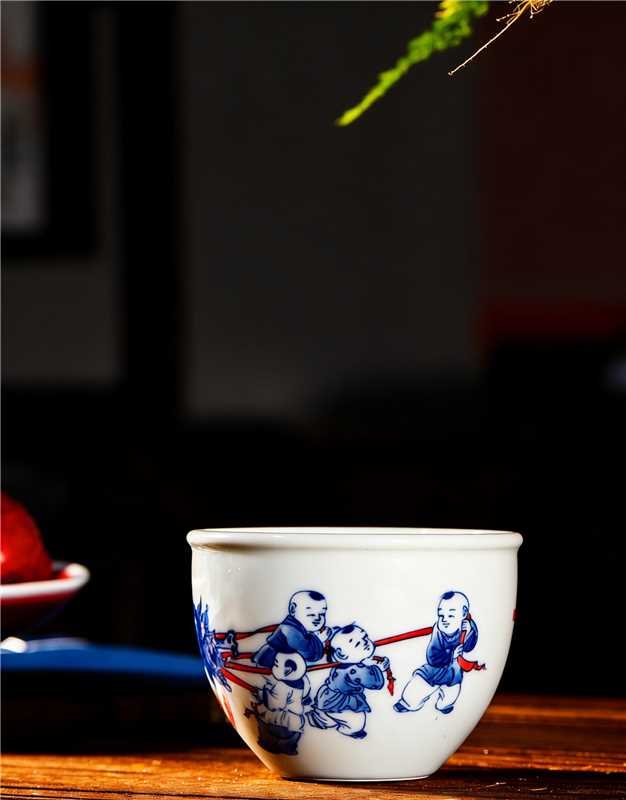
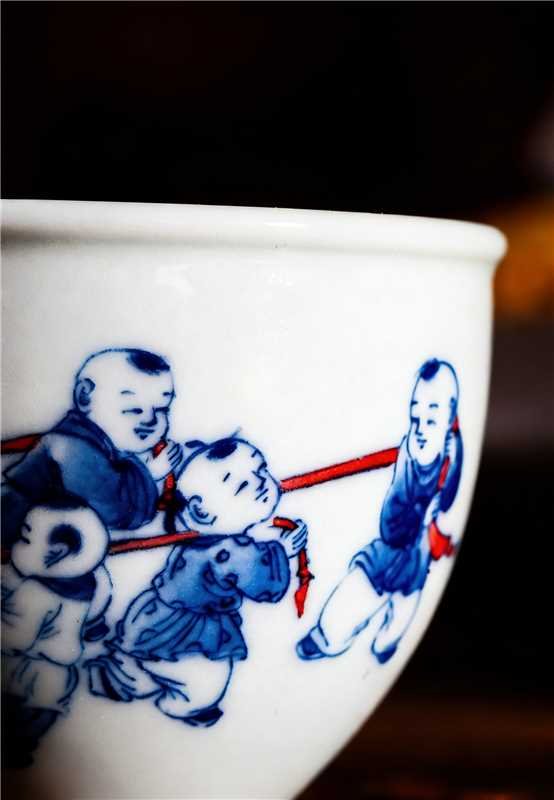
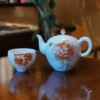
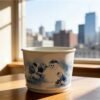
That cup was a masterpiece of Jingdezhen Porcelain. It was small, delicate enough to fit in the palm of my hand, yet it felt heavy with meaning. The glaze was pristine white, like the belly of a dove, but it was the painting that captured my soul. It depicted a scene of pure joy: chubby, rosy-cheeked boys engaged in a tug-of-war, their faces beaming with mischief. One boy held a massive peach, while another clutched a split pomegranate spilling seeds of abundance. It was a depiction of Children Offering Longevity, a motif that transcends mere decoration to become a prayer for life.
The Alchemy of Fire: Understanding Underglaze Red Porcelain
To understand the value of this cup, one must first understand the perilous journey it took to exist. Jingdezhen, often called the “Porcelain Capital” of China, has been producing ceramics for over a thousand years. But even in a city renowned for its artistry, Underglaze Red Porcelain holds a special, almost mythical status.
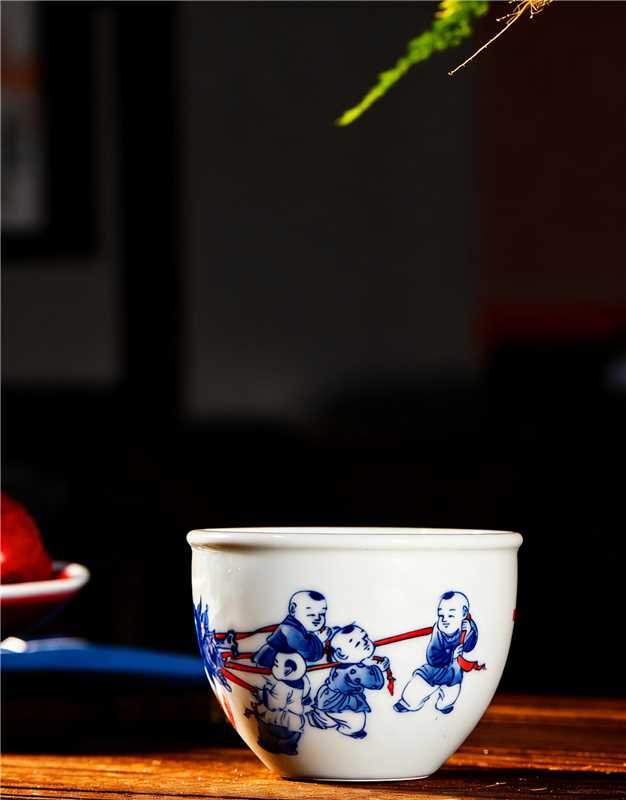
Unlike standard blue and white porcelain, where the cobalt blue pigment is stable, underglaze red relies on copper oxide. Copper is notoriously fickle. In the kiln, it requires a precise balance of oxygen and temperature. Too much heat, and the red turns gray or green; too little, and it remains a dull, lifeless brown. The success rate is historically low—hence the ancient saying, “Red is harder than blue.”
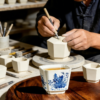
The process is alchemy. The artisan sketches the design onto the unfired clay body, then paints the intricate details using a brush loaded with copper-based pigment. A layer of transparent glaze is applied over the painting, sealing the colors in. Finally, the piece is fired at over 1,300 degrees Celsius. If the kiln master’s calculations are perfect, the copper transforms into a lustrous, ruby red.
Decoding the Motif: The Symbolism of Children Offering Longevity
The exterior of the cup is a narrative frozen in time. The Children Offering Longevity pattern is not random; every element is a carefully chosen symbol of good fortune.
In traditional Chinese culture, children represent the future, vitality, and the continuation of the family line. Their chubby cheeks symbolize health. The peach is the fruit of immortality, a direct symbol of Longevity. When a pomegranate splits open, it reveals hundreds of seeds. In Chinese, the word for “seed” sounds like the word for “son,” making it a powerful wish for “many sons” and a thriving family clan.
The boys are not just standing still; they are engaged in a game. This dynamic scene represents the harmony and joy found in family life. It suggests that longevity is not just about living a long life, but living a happy, active, and engaged one.
The Ritual of Tea: Why This Cup Matters
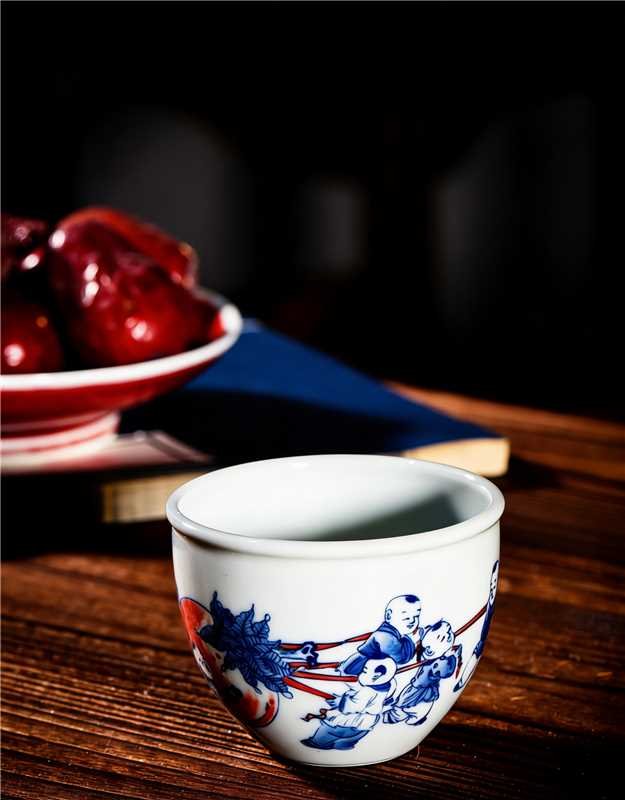
In the modern world, we often drink tea out of disposable cups. But using a handcrafted Jingdezhen Porcelain cup changes the experience entirely. High-quality porcelain is translucent; when held up to the light, the cup glows with a warm, jade-like luminescence. It doesn’t retain heat as aggressively, allowing the tea’s aroma to bloom.
Drinking tea from a cup painted with Children Offering Longevity adds a meditative layer to the ritual. As the hot water swirls in the cup, the red patterns seem to dance. It reminds the drinker to slow down and remember the people they love. It transforms a simple caffeine break into a moment of cultural connection.
Behind every piece of Underglaze Red Porcelain is an artisan who spent years mastering their craft. If you are looking for more than just a vessel to hold liquid, if you are looking for a piece of history and a symbol of good fortune, then this Jingdezhen Porcelain cup is waiting for you. It is not just a purchase; it is an inheritance.
Add comment