
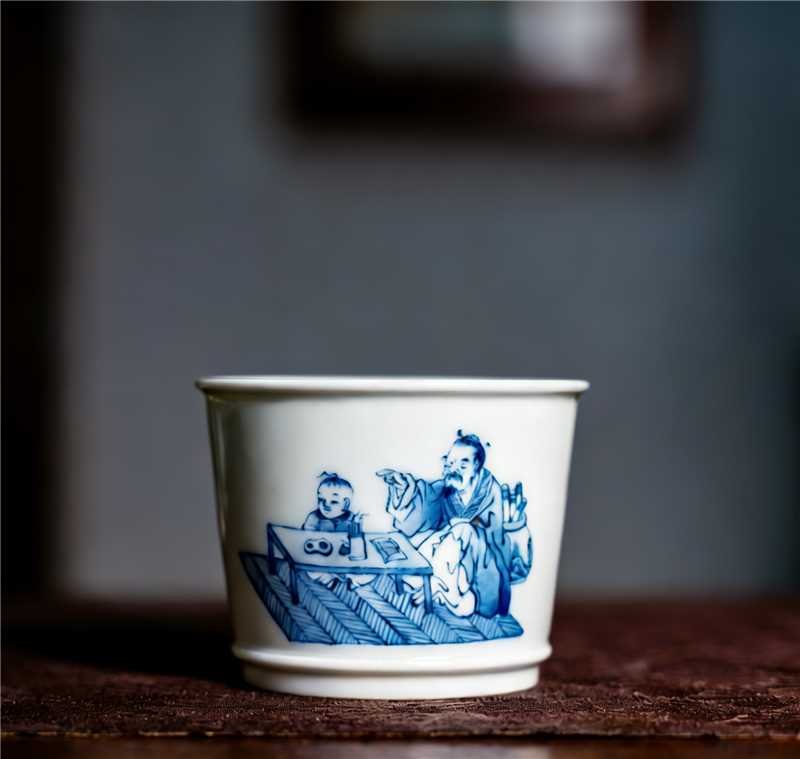
7 Unbelievable Reasons Why The Hand-painted Jiaozi Tu Blue and White Porcelain Tea Cup is the Ultimate Masterpiece
Introduction
In the world of Chinese tea culture, the vessel is just as important as the leaf. It is not merely a container; it is a canvas, a storyteller, and a bridge to the past. Among the vast array of tea wares, one piece stands out not just for its elegance, but for its profound narrative: the Hand-painted Jiaozi Tu Blue and White Porcelain Tea Cup. This is not just a cup; it is a legacy captured in ceramic form. In this article, we will delve deep into the history, craftsmanship, and symbolism of this exquisite piece, exploring why it is the ultimate choice for connoisseurs and collectors alike.
1. The Story Behind the Motif: Decoding “Jiaozi Tu“
To truly appreciate this tea cup, one must first understand the image painted upon it. The term “Jiaozi Tu“ translates to “The Picture of Teaching a Son” or “Educating the Son.” This motif is deeply rooted in Confucian values, which emphasize the importance of education, family, and the passing down of wisdom from one generation to the next.
A Scene of Timeless Wisdom
The imagery typically depicts an elder—a scholar or a father—guiding a young child in the ways of the world. It is a visual representation of the hope parents place in their children, and the diligence required to achieve success. In ancient China, this was not just a family scene; it was a societal aspiration. When you hold this cup, you are holding a symbol of perseverance and the pursuit of knowledge.
Cultural Significance in Modern Times
While the scene is historical, its message is timeless. In today’s fast-paced world, the Jiaozi Tu serves as a reminder to slow down, to appreciate the wisdom of our elders, and to invest in our own growth. It transforms the simple act of drinking tea into a meditative ritual of reflection.
2. The Art of Blue and White: A Legacy of Elegance
The vessel for this story is the legendary Blue and White Porcelain. This style originated in the Tang Dynasty but reached its zenith during the Ming and Qing dynasties. It is characterized by its cobalt blue pigments painted on a white porcelain body, creating a striking contrast that is both vibrant and subtle.
The Allure of the Palette
The blue used in these ceramics is derived from cobalt ore. When fired at high temperatures, it produces a lustrous, deep blue hue that seems to glow against the white background. This specific aesthetic has captivated collectors for centuries, making Blue and White Porcelain synonymous with Chinese artistry.
Why Blue and White for Tea?
From a practical standpoint, the white interior of the porcelain allows the true color of the tea liquor to shine through. Whether it is the amber hue of a Pu-erh or the jade green of a Longjing, the cup acts as a perfect frame, enhancing the visual appreciation of the tea. The cool, smooth texture of the porcelain also complements the warmth of the liquid, providing a sensory experience that is unmatched.
3. The Soul of the Piece: Hand-painted Craftsmanship
In an age of mass production, the true value of an object lies in its imperfections—the subtle variations that prove it was touched by human hands. This is where the Hand-painted aspect of our tea cup becomes crucial.
The Difference Between Machine and Master
A machine-printed cup is uniform and flawless, but it lacks soul. A Hand-painted Tea Ware piece, however, carries the heartbeat of the artist. You can often see the slight pressure of the brushstroke, the variation in the blue pigment, and the unique flow of the lines. These are not flaws; they are signatures of authenticity.
The Process of Creation
Creating a hand-painted piece is a labor-intensive process that requires immense patience. The artist must first sketch the design onto the unfired clay. Then, using a brush dipped in cobalt oxide, they paint the Jiaozi Tu scene with precision. Each line is deliberate. After the painting is complete, the cup is glazed and fired at temperatures exceeding 1,300 degrees Celsius. The transformation in the kiln is a moment of alchemy, turning the matte blue pigment into the glossy, eternal blue we admire.
4. The Intersection of Art and Function
A tea cup must be beautiful, but it must also be functional. The Hand-painted Jiaozi Tu Blue and White Porcelain Tea Cup achieves a perfect harmony between form and function.
Ergonomics and Design
The shape of the cup is designed to fit comfortably in the hand. The rim is slightly flared to direct the tea smoothly to the palate, allowing the drinker to fully experience the aroma and flavor. The weight of the porcelain is balanced—it feels substantial enough to convey quality, yet light enough to be handled with grace.
Enhancing the Tea Experience
Porcelain is an inert material, meaning it does not absorb flavors or scents from the tea. This ensures that every brew tastes pure and unadulterated. Furthermore, porcelain retains heat well, keeping your tea at the optimal temperature for longer. When you sip from this cup, the tea’s aroma is concentrated, and the flavor profile is enhanced, making every cup a premium experience.
5. Collectibility and Value
For collectors, this tea cup represents more than just a drinking vessel; it represents an investment in culture.
A Piece of History
Owning a piece of Blue and White Porcelain connects you to centuries of history. The Jiaozi Tu motif is a classic design that has been cherished for generations. By acquiring this cup, you are participating in a tradition that spans millennia.
A Unique Gift
Due to its hand-painted nature, no two cups are exactly alike. This makes it an ideal gift for those who appreciate uniqueness and craftsmanship. Whether it is for a business associate, a family member, or a fellow tea enthusiast, this cup conveys a message of respect and high regard.
6. How to Care for Your Masterpiece
To ensure that your Hand-painted Jiaozi Tu Blue and White Porcelain Tea Cup remains a treasure for years to come, proper care is essential.
Cleaning
Always wash the cup by hand with mild soap and a soft sponge. Avoid abrasive scrubbers that could scratch the glaze or the delicate painted surface.
Storage
Store the cup in a soft cloth bag or a wooden box to prevent scratches. Avoid stacking heavy objects on top of it.
Display
When not in use, consider displaying the cup on a tea tray or in a glass cabinet. Its beauty is meant to be seen and appreciated, even when it is not holding tea.
Conclusion
The Hand-painted Jiaozi Tu Blue and White Porcelain Tea Cup is more than just ceramics; it is a vessel of culture, history, and art. It combines the elegance of Blue and White Porcelain with the narrative depth of the Jiaozi Tu motif and the soul of Hand-painted craftsmanship. For the discerning tea lover, this cup offers not just a drink, but an experience—an opportunity to connect with the past while enjoying the present. If you are looking for a piece that tells a story and elevates your tea ritual, this is the ultimate masterpiece.

Add comment