
The Ultimate Guide to Six-Sided Elegance: My Life with a Hand-Painted Hexagonal Tea Cup
In the world of tea ware, finding a vessel that balances art and utility is rare. In all the years I’ve lived with tea, I’ve come to believe: if water is the soul of tea, then the cup is its quiet attire. Round cups fill my shelves—elegant in their own way, yet easily lost in the quiet rhythm of daily brewing. One day, I held this hand-painted hexagonal tea cup, and I knew immediately: this was not just another vessel. It was a piece of Oriental grace, resting gently in the palm of my hand, like a three-dimensional ink painting come to life.
This hexagonal tea cup speaks to the calm, understated taste of Eastern literati. It does not shout for attention. It simply exists—clay, fire, light, and brushstrokes, in quiet conversation.
The Difficulty of the Hexagon: Crafting a Perfect Hexagonal Tea Cup
Old potters often say: One square vessel is worth ten round ones.
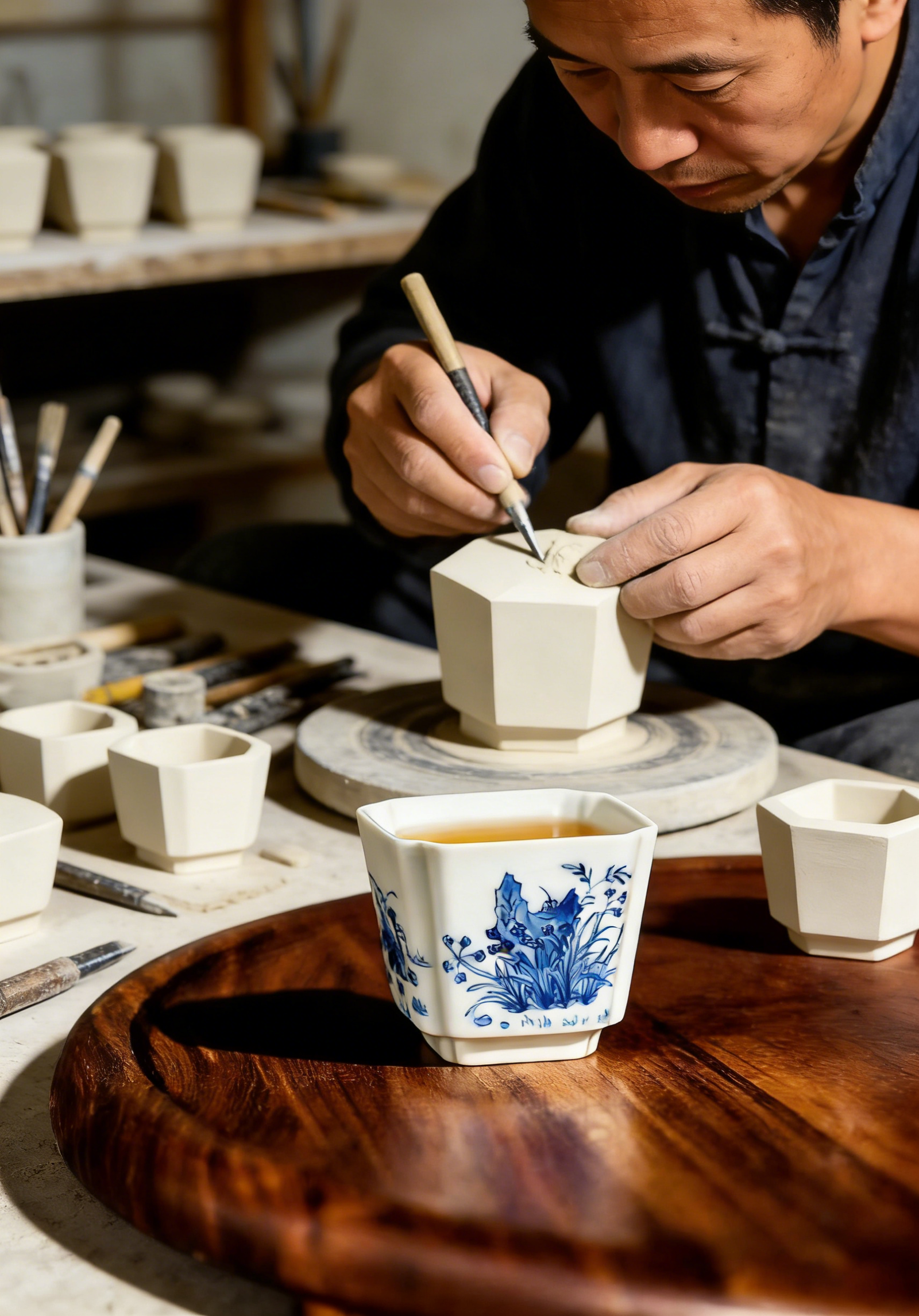
I didn’t fully understand this until I watched artisans shape this hand-painted hexagonal tea cup. Making rounded porcelain is one thing; forming clean, even sides requires extreme patience. Every step—from throwing the clay to trimming the edges—demands steady hands. The six sides must be perfectly symmetrical. The ridges must look sharp, yet feel soft and smooth against the skin.
The real test comes in the kiln. High heat easily warps angular shapes. Many cups crack or distort before they are finished. Each perfect hexagonal cup that survives is a small victory. When I run my fingers along its subtle edges, I can almost feel the hours of careful trimming, the quiet focus in the studio. No ordinary round cup can offer this kind of tactile story.
Landscapes in Miniature: The Soul of Hand-Painted Blue and White
Look closely at the patterns, and you will see more than flowers or lines.
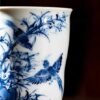
These are tiny Chinese landscapes: ancient pines, standing firm; rugged rocks, calm and steady. The artist painted them with fine brushes and deep cobalt pigment, stroke by stroke. Painting on unfired clay is unforgiving—the material absorbs the pigment instantly, leaving no room for correction. The artist uses traditional cun textures to give the rocks weight, and sharp outlines to breathe life into the pine needles.
What moves me most is that no two cups are exactly alike.
The bend of a branch, the depth of a stroke—they change with the artist’s breath and mood in that moment. This gentle imperfection is the soul of hand-painted art. Machine-printed decals can never replicate this living warmth. To own one is to own a small, unique painting.
Light and Shadow: When Glaze and Tea Dance Together【Fig 4】
Look closely at the patterns on this hand-painted hexagonal tea cup, and you will see more than flowers or lines.
These are tiny Chinese landscapes: ancient pines, standing firm; rugged rocks, calm and steady. The artist painted them with fine brushes and deep cobalt pigment, stroke by stroke. Painting on unfired clay is unforgiving—the material absorbs the pigment instantly, leaving no room for correction. The artist uses traditional cun textures to give the rocks weight, and sharp outlines to breathe life into the pine needles. For more history on this technique, you can read about Blue and White Porcelain.
What moves me most is that no two cups are exactly alike.
The bend of a branch, the depth of a stroke—they change with the artist’s breath and mood in that moment. This gentle imperfection is the soul of hand-painted art. Machine-printed decals can never replicate this living warmth. To own one is to own a small, unique painting.
Light and Shadow: When Glaze and Tea Dance Together
This hexagonal tea cup comes alive in light.
Made from premium Jingdezhen kaolin clay and fired at over 1300°C, its glaze resembles fine jade—warm, milky, not a cold, harsh white, but a soft duck-egg ivory. When light touches its hexagonal edges, shadows and highlights shift gently, giving the cup an elegant, architectural presence.
Pour in amber pu’er or bright black tea, and the color contrasts beautifully with the clean white interior and the calm blue patterns. Hold it up to soft light, and you can even see the faint shadow of the outside painting through the thin porcelain. In a quiet tea room, it glows subtly, becoming the heart of the table before I take a single sip.
Practical Grace: A Cup Made for Daily Life
Beauty means little if it does not serve life. This hand-painted hexagonal tea cup was designed for real tea moments:
- Comfortable to hold: The edges are gently chamfered. Structured, yet never sharp against the lips. It fits perfectly in the hand, ideal for the traditional three-sip way of drinking.
- Holds fragrance and warmth: Its slightly tapered shape gathers the tea’s aroma, letting you notice its hidden layers.
- Easy to care for: The smooth, dense glaze does not trap odors or stains. Whether I brew rich ripe pu’er or delicate green tea, a quick rinse returns it to its clean, quiet state.
Alone reading in my study, or sitting quietly with friends, this cup softens the space. Paired with a zisha teapot or a simple wooden tray, it turns any corner into a small, peaceful sanctuary.
Conclusion: Holding Culture in My Hands
We live in an age of mass-produced things—clean, efficient, but often soulless.
This hand-painted hexagonal tea cup reminds me to slow down. It is not just a drinking vessel. It carries the tradition of Jingdezhen, the skill of the craftsman, and the quiet philosophy of a life lived gently.
When I lift this cup, I am not just holding tea. I am holding a piece of living culture. As the liquid moves gently against the painted pines and rocks, time softens, and the world feels a little calmer.
To choose this cup is to choose a life of texture, grace, and quiet beauty. May it accompany you through many peaceful afternoons and quiet nights.

Add comment